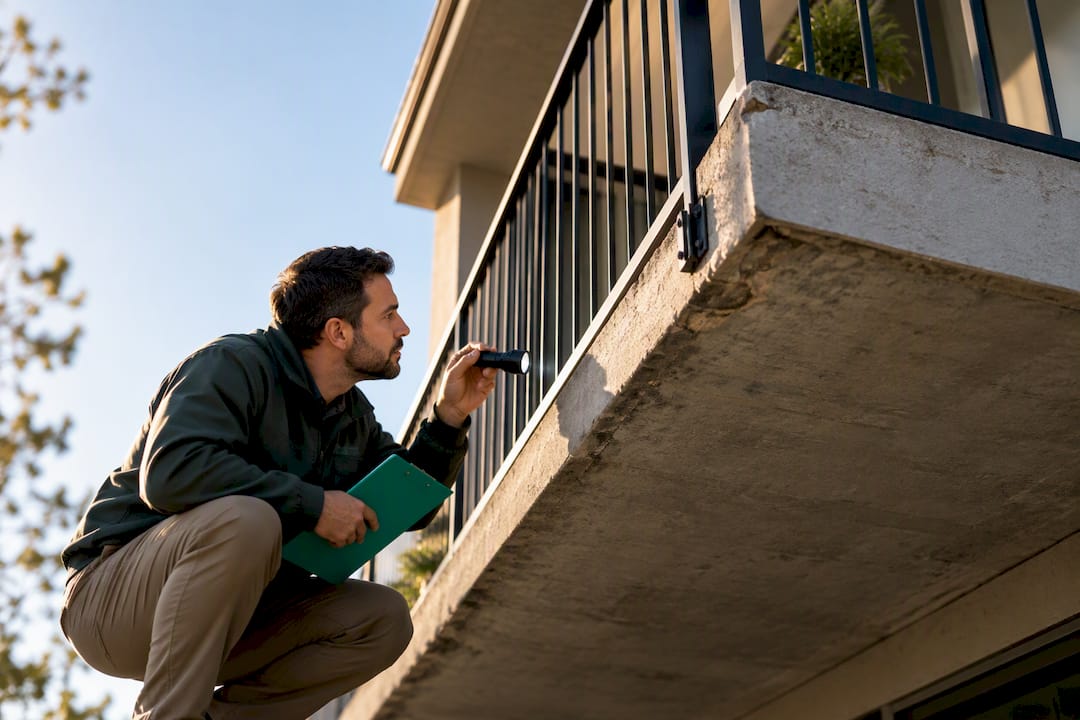
If you own or manage a California condominium governed by an HOA, SB 326 applies, and its first inspection deadline already passed on January 1, 2025. If you own a rental apartment building instead, SB 721 governs you, with an initial deadline of January 1, 2026. Either way, the next move is the same: hire a qualified inspector now and keep written proof of the engagement.
TL;DR:
- HOA-governed condominiums had an inspection deadline of January 1, 2025, requiring licensed engineers or architects to inspect balconies and supported structures every nine years.
- Rental apartment buildings with three or more units rely on SB 721, with a first inspection deadline of January 1, 2026, requiring at least 15% sampling of exterior elements and reinspection every six years.
- Inspections mainly consist of visual checks using non-invasive tools, with mandatory further inspection if water intrusion or decay is detected, and reports must be filed within 45 days.
- Missing repair deadlines under SB 721 can incur civil penalties of $100 to $500 per day, while SB 326 enforcement involves local authorities and remedies without fixed daily fines.
- Owners and HOA boards should confirm applicable laws, engage licensed inspectors, retain detailed records, and plan repairs promptly to avoid penalties and facilitate smooth resale transactions.
Table of Contents
- SB 326 at a glance: HOA and condominium responsibilities
- SB 721 at a glance: rental apartments and owner obligations
- Inspection process: visual vs. further inspection and what the report must include
- Deadlines, sampling, and recordkeeping at a glance
- Repairs, permits, and penalties after defects are identified
- Practical compliance checklist for owners and HOA boards
- What buyers and their representatives should watch for
- How Ficustree supports buyers reviewing building inspection disclosures
- Official statutes and county guidance for quick reference
- Sources
- FAQ
SB 326 at a glance: HOA and condominium responsibilities
SB 326 covers common interest developments, meaning condo buildings with three or more units managed by a homeowners’ association. Under Civil Code §5551, the HOA board must have a licensed structural or civil engineer, or a licensed architect, perform a visual inspection of a random, statistically significant sample of the building’s exterior elevated elements. If the inspector spots water intrusion, a further, more invasive inspection may follow.
The law also asks boards to line up this inspection cycle with their reserve study planning, since both processes look at the same load-bearing components and repair timelines.
- The inspection covers balconies, decks, walkways and stairways supported by wood framing.
- Inspectors must be licensed engineers or architects, not general contractors.
- Inspections repeat at least once every nine years.
- Reports must be signed, dated and kept on file by the association.
SB 721 at a glance: rental apartments and owner obligations
SB 721 targets multifamily rental buildings with three or more units where exterior elevated elements rely on wood framing for structural support. Health & Safety Code §17973 allows a wider pool of qualified inspectors than SB 326 does: licensed architects, licensed civil or structural engineers, or A, B or C-5 contractors with at least five years of relevant experience, along with inspectors certified by local jurisdictions.
Reinspection follows every six years after the first cycle.
- Owners choose from architects, structural or civil engineers, or qualified A/B/C-5 contractors.
- A minimum of 15% of each element type must be inspected.
- Reinspection is required every six years.
- Civil penalties apply once repair deadlines are missed and enforcement is triggered, typically by a complaint or a reported immediate threat.
Inspection process: visual vs. further inspection and what the report must include
Most inspections start as visual inspections. Inspectors walk the property looking at railings, ledger boards, waterproofing and connection points, often using moisture meters, borescopes or infrared cameras to check for hidden decay without tearing into the structure.
- The inspector performs a visual inspection of the sampled elements using non-invasive tools.
- If moisture, rot or corrosion appears, the inspector orders a further inspection, which can involve removing siding or decking to check the framing directly.
- The inspector prepares a written report with photos, a narrative of findings, and a clear flag for any element posing an immediate safety threat.
- If an immediate threat exists, the inspector must notify local code enforcement within 15 days, and deliver the full report within 45 days of completing the inspection.
Pro Tip: Ask your inspector upfront how they define “immediate threat” for your building type, so you are not caught off guard by a same-week notification to code enforcement.
Deadlines, sampling, and recordkeeping at a glance

Keeping the dates and thresholds straight matters more than memorizing statute numbers. SB 326’s first inspection window closed on January 1, 2025. SB 721’s original 2025 deadline was pushed to January 1, 2026 after AB 2579 extended it by a year.
SB 721 sets civil penalties of $100 to $500 per day once an owner misses the statutory repair window without acting, a figure drawn directly from HSC §17973.
- SB 326 requires a statistically significant sample; SB 721 requires at least 15% of each element type.
- Inspectors must deliver written reports within 45 days of completing the inspection.
- Immediate threats must reach local enforcement within 15 days.
- Retain inspection reports for at least two full inspection cycles and include them in resale disclosures.
Repairs, permits, and penalties after defects are identified
Once an inspection turns up a real problem, the clock and the paperwork both start moving.
- If the defect creates an immediate safety risk, restrict access to the area right away and arrange emergency shoring or repairs before anything else.
- For non-emergency repairs, apply for permits within the statutory window and hire a licensed contractor who was not the original inspector, since the same party cannot inspect and repair under the law.
- Missing the repair deadline under SB 721 triggers civil penalties of $100 to $500 per day until the work is completed.
- Under SB 326, enforcement runs through local code authorities and general civil remedies rather than a fixed daily penalty schedule.
- Delayed repairs can also complicate insurance renewals or claims, since insurers increasingly ask for proof of current EEE compliance before renewing coverage on older buildings.
Practical compliance checklist for owners and HOA boards
A little organization now saves a lot of stress later, especially if a sale or refinance is on the horizon.
- Confirm which statute applies to your property and document ownership structure and governance in writing.
- Engage an independent, licensed inspector and verify their license, insurance, and the lack of conflict of interest with any repair contractor.
- Keep engagement letters, inspection reports, photos, permit applications, and repair invoices together in one file.
- Coordinate budgeting with your reserve study, plan for possible special assessments, and collect at least two contractor bids for larger repairs.
Pro Tip: Start your file now, even before an inspector arrives. A dated engagement letter is often the strongest evidence of good-faith compliance if a complaint ever triggers an inquiry.
What buyers and their representatives should watch for
Inspection reports under SB 326 and SB 721 increasingly show up in resale disclosures, and buyers should ask for them early rather than waiting for escrow. A building with a clean, well-documented inspection history tells a very different story than one with vague or missing records, and that difference shapes negotiating leverage and peace of mind. Clear compliance paperwork also makes it easier for a buyer’s representative to flag real risk instead of guessing.
— Anand
How Ficustree supports buyers reviewing building inspection disclosures
Reading through a stack of inspection reports, permit filings, and HOA disclosures is exactly the kind of task that eats up a first-time buyer’s evenings. Ficustree’s decision intelligence tools are built to shorten that process, flagging the parts of a disclosure package that actually affect your offer or your closing timeline instead of leaving you to sort it out alone.

- We help you review inspection reports and disclosures quickly, calling out items tied to balcony or structural compliance.
- Our platform prioritizes findings that affect affordability or escrow risk, so you know what to ask about before you’re under contract.
- Buyer representation through the Direct Path pairs that review with a one-time service fee at closing plus commission, with a rebate where legally permitted.
If you are evaluating a condo or apartment building with an EEE inspection history, visit Ficustree to see how buyer representation and document review work together, or start with our guide on reviewing California buyer disclosures before you make an offer.
Official statutes and county guidance for quick reference
- Health & Safety Code §17973: full statutory text for SB 721.
- Civil Code §5551: full statutory text for SB 326.
- SB 721 bill history: legislative record and enactment details.
Sources
- California Health & Safety Code §17973 (SB 721)
- Exterior elevated elements inspection bills: SB 721 & SB 326 (El Dorado County guidance)
- SB-721 bill history (California Legislature)
FAQ
What are the requirements for inspecting balconies under SB 326?
SB 326 requires HOA-governed condo buildings with three or more units to have a licensed structural or civil engineer, or architect, visually inspect a statistically significant sample of exterior elevated elements at least once every nine years, as set out in Civil Code §5551. If the inspector finds water intrusion, a further, more invasive inspection can follow.
Can I smoke on my balcony at my apartment?
Smoking rules on balconies come from local ordinances, lease terms, or HOA bylaws, not from the structural inspection laws covered here. SB 326 and SB 721 deal only with the physical safety of balconies and other exterior elevated elements, so check your lease or association rules separately for smoking policies.
How much does a balcony inspection cost in California?
Costs vary by building size, sample requirements, and which type of licensed professional performs the work; no fixed statewide figure is published for either law. Getting quotes from two independent, properly licensed inspectors is the most reliable way to budget for your specific property.
What are the laws regarding apartment inspections in California?
Rental apartment buildings with three or more units and wood-framed exterior elevated elements fall under SB 721, codified at HSC §17973, which set an initial inspection deadline of January 1, 2026 after a one-year extension.
Recommended
- First-Time Homebuyer Mistakes California Buyers Must Avoid
- California Closing Costs Breakdown for First-Time Buyers
- California Escalation Clauses: Decision Checks for First Time Buyers
- Avoid the FAIR Plan Trap: How California Buyers Secure Coverage

Leave a Reply