Category: Market Guides

  • How AI Personalized Home Search Works in 2026

    How AI Personalized Home Search Works in 2026

    AI personalized home search is the process where machine learning and natural language processing analyze your behavior, preferences, and lifestyle signals to deliver property recommendations that evolve with you. Unlike a static filter on Zillow or Redfin, this technology builds a living profile of what you actually want, not just what you typed. 82% of Americans now use AI in their real estate research, while still relying on agents for final decisions. That split tells you exactly where AI earns its place: in the messy, time-consuming discovery phase that exhausts most first-time buyers in California and Texas before they ever see a house in person.

    How behavioral data personalizes home search results

    Behavioral data is the engine behind every hyper-personalized home search. When you browse listings, the AI does not just record what you clicked. It tracks how long you paused on a kitchen photo, which floor plans you scrolled past in two seconds, and which listings you revisited three days later.

    AI platforms analyze subtle behavioral signals including time hesitation, revisit frequency, and photo interaction order to refine match accuracy. A buyer who says they want a three-bedroom home but spends twice as long on four-bedroom listings is sending a clear signal. The AI reads that signal and adjusts recommendations accordingly, even when the stated filter never changes.

    Hands typing on laptop in sunlit home office

    This behavioral profiling produces results that feel almost intuitive. AI-driven recommendation systems improved property match relevance by over 30%. That improvement comes directly from replacing rigid keyword matching with a dynamic model that weighs dozens of micro-interactions simultaneously.

    The practical benefits for buyers are significant:

    • Expanded discovery: Buyers using AI-personalized tools are twice as likely to expand their search criteria, finding options they would have manually excluded.
    • Reduced overload: AI delivers fewer listings ranked by predicted relevance, so you spend less time sorting and more time evaluating real contenders.
    • Preference detection: The system catches subtle preferences, like a consistent attraction to homes with natural light or open layouts, before you consciously articulate them.
    • Adaptive filtering: As your priorities shift, the behavioral model updates without requiring you to manually reset every filter.

    Pro Tip: When you start using an AI-powered search platform, spend the first few sessions browsing broadly. Click on listings that interest you even slightly. The more behavioral data you generate early, the faster the system calibrates to your real preferences.

    How does conversational AI change the home search experience?

    Conversational AI lets you search the way you actually think, not the way a database is organized. Instead of selecting “3 beds, 2 baths, $650,000 max” from dropdown menus, you can type or say: “I need a home with a quiet home office, a 30-minute commute to downtown Austin, and a backyard big enough for a dog.” The system interprets that as a structured query and returns results that match the lifestyle, not just the specs.

    Conversational AI interprets lifestyle needs beyond explicit filters, including commute times and room functionality. This matters enormously for first-time buyers who do not yet know the right real estate vocabulary. You do not need to know what “ADU” means or how to filter by lot size. You describe your life, and the AI translates it.
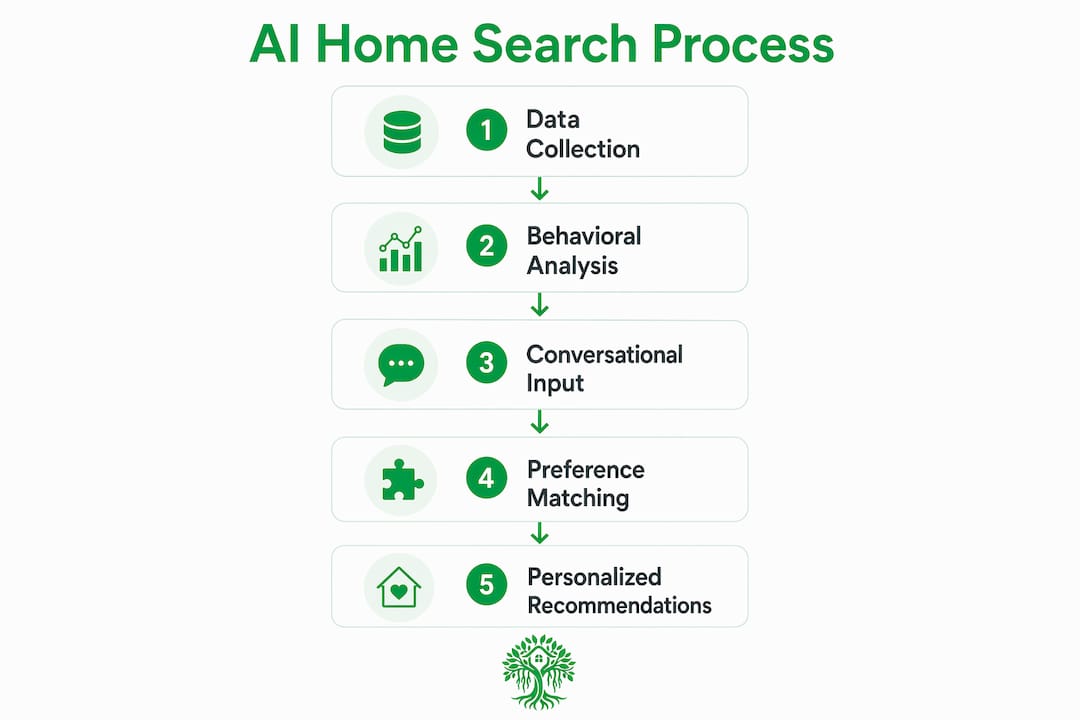
    Infographic illustrating AI home search process steps

    The experience also improves across sessions. AI search contexts persist across sessions, remembering buyer preferences and avoiding redundant input. You do not re-explain your priorities every time you log back in. The system picks up where you left off, which is a meaningful quality-of-life improvement during a search that can span weeks or months.

    Here is how a conversational AI session typically unfolds for a first-time buyer:

    1. Initial query: You describe your situation in plain language, including budget, location preferences, and lifestyle needs.
    2. Clarifying exchange: The AI asks follow-up questions, such as whether you prioritize school district ratings or proximity to transit.
    3. Curated results: The system returns a ranked list of listings matched to your full profile, not just your typed keywords.
    4. Feedback loop: You react to results, and the AI refines its model based on what you engage with or dismiss.
    5. Session memory: When you return the next day, your preferences and prior feedback are already loaded.

    Pro Tip: Treat the AI like a knowledgeable friend, not a search bar. The more specific and conversational you are about your daily life, the better it matches your real needs. Mention your commute, your hobbies, and what bothered you about your last apartment.

    The core difference between traditional and AI-powered search is static versus dynamic criteria. A traditional search engine applies your filters exactly as entered and returns every listing that technically qualifies. An AI-powered system applies your filters, then layers in behavioral data, lifestyle signals, and predictive modeling to rank results by actual fit.

    Feature Traditional filter search AI-powered personalized search
    Criteria application Static, exact match Dynamic, weighted by behavior
    Preference detection Manual input only Inferred from micro-interactions
    Session memory Resets each visit Persists and evolves over time
    Result volume High, unranked Curated, ranked by predicted fit
    Lifestyle alignment Limited to listed specs Includes commute, neighborhood, lifestyle
    Human agent role Separate from search Informed by AI search history

    The limitations of AI search are real and worth naming. The system cannot inspect a foundation, read a seller’s disclosure, or negotiate a counteroffer. Machine learning models reduce errors by up to 25%, but no model eliminates the need for professional judgment at the offer stage. AI handles discovery well. Humans handle decisions best.

    How does AI personalized search improve the agent-buyer relationship?

    AI does not replace your agent. It makes your agent dramatically more useful from the first meeting. When you arrive at a consultation having already spent weeks interacting with an AI-powered platform, your agent has access to a detailed picture of what you actually responded to, not just what you said you wanted.

    Agents use AI search histories as consultation tools to identify true buyer motivations before meetings. That means less time spent on mismatched showings and more time focused on homes that genuinely fit. For buyers in competitive California markets like the Bay Area or San Diego, that efficiency is not a convenience. It is a competitive advantage.

    The shift in how agents and buyers interact looks like this:

    • Pre-search handled by AI: Discovery, filtering, and preference mapping happen before the agent gets involved, saving hours of back-and-forth.
    • Smarter showing prep: Agents review your AI search history to understand which features you consistently engaged with, so showings are targeted and purposeful.
    • Better offer strategy: When an agent understands your true priorities, they can advise more precisely on which concessions matter and which do not.
    • Higher-quality conversations: AI complements human agents by shifting them toward higher-value advisory roles, handling pre-search discovery so agents focus on negotiation and closing.

    The result is a buyer who walks into a showing prepared, and an agent who already understands what that buyer needs. That combination closes deals faster and with fewer regrets. For first-time buyers in Texas markets like Austin or Houston, where inventory moves quickly, that preparation gap matters.

    Key Takeaways

    AI personalized home search works by combining behavioral data, conversational input, and machine learning to deliver ranked, lifestyle-matched listings that improve with every session.

    Point Details
    Behavioral data drives matching AI tracks micro-interactions like revisit frequency and photo time to infer real preferences.
    Conversational input replaces filters Natural language queries let buyers describe lifestyle needs instead of selecting dropdown specs.
    Session memory reduces friction AI remembers your priorities across visits, so you never start from scratch.
    AI expands buyer discovery Buyers using AI tools are twice as likely to find options outside their original criteria.
    Agents become more effective AI search histories give agents a clear picture of buyer motivations before the first meeting.

    What I have learned watching buyers use AI search in California and Texas

    The buyers who get the most out of AI-powered search are the ones who treat it like a conversation, not a form. I have watched first-time buyers in the Bay Area spend 20 minutes setting up perfect filters and then wonder why the results feel generic. The filters are not the product. The behavior is.

    The most underused feature on every AI platform I have tested is the feedback loop. When you dismiss a listing, tell the system why. When you save one, note what caught your attention. That explicit feedback, layered on top of your behavioral data, accelerates the calibration process by days. Most buyers skip it entirely.

    One thing I want to be direct about: AI search is not a shortcut to skipping your agent. The buyers who treat it that way end up with a great list of homes and a weak offer strategy. The technology is genuinely good at discovery. It is not good at reading a seller’s disclosure packet or knowing that a neighborhood in Sacramento has a deferred infrastructure problem. Use AI to find the right homes faster. Use your agent to close the right one well.

    For tech-savvy buyers in Texas and California, my practical advice is to start your AI search early, before you feel ready. The system needs time to learn your preferences. Buyers who start browsing two months before they plan to make an offer arrive at that moment with a calibrated profile and a much shorter list of genuine contenders.

    — Anand

    Ficustree puts AI personalized search to work for you

    Ficustree is built specifically for first-time buyers in California and Texas who want the benefits of AI-powered search without the confusion of a traditional listings site.

    https://ficustree.ai

    The platform uses conversational AI and behavioral matching to surface homes that fit your life, not just your filter settings. You describe your priorities in plain language, and Ficustree builds a ranked, evolving list of properties matched to your actual preferences. When you are ready to see a home, hourly showing agents are available on demand. When you are ready to make an offer, you have a full picture of your true priorities. Buyers pay $1,000 at closing plus 1% commission and keep a rebate of roughly 2% where legally permitted. Start your personalized search and let the house find you.

    FAQ

    AI personalized home search is a property discovery method that uses machine learning and natural language processing to match listings to a buyer’s behavior, lifestyle, and stated preferences. It produces ranked results that improve over time as the system learns from your interactions.

    How does behavioral data improve home search results?

    AI tracks micro-interactions like photo viewing time, revisit frequency, and scroll behavior to build a preference profile that goes beyond what you type into a filter. This behavioral profiling improves match relevance by over 30% compared to traditional keyword-based search.

    Does AI search replace a real estate agent?

    No. AI handles pre-search discovery and preference mapping, while agents focus on showings, negotiations, and closing. The two work best together, with AI search histories giving agents a clearer picture of buyer priorities before the first consultation.

    Can I use conversational AI to search for homes in California or Texas?

    Yes. Platforms like Ficustree and Realtor.com’s RealAssist AI accept natural language queries, so you can describe commute needs, lifestyle preferences, and home features in plain English. The system translates your description into a structured search and returns curated results.

    How long does it take for AI to learn my home preferences?

    The calibration timeline varies by platform and usage frequency, but most AI systems produce noticeably better results after several sessions of active browsing and feedback. Starting your search two months before you plan to make an offer gives the system enough time to build an accurate profile.


  • How Open Houses Work in the Home Buying Process

    How Open Houses Work in the Home Buying Process

    An open house is a scheduled event where a seller’s listing agent opens a property to potential buyers for viewing without an appointment, typically lasting about two hours. Understanding how open houses work in the buying process gives first-time buyers in California and Texas a real edge. You get to walk through homes, read the market, and gather information that shapes your offer strategy. Done right, an open house is not a casual stroll. It is a structured data-gathering mission.

    How open houses work: format, flow, and what to expect

    An open house follows a predictable format once you know what to look for. Open houses usually last 2 hours, most commonly on Saturday or Sunday afternoons. That window is tight, so arriving early gives you the best access to the listing agent before the crowd arrives.

    Agent greeting buyers at open house entrance

    When you walk in, you will typically be asked to sign in. That sign-in sheet is a lead-capture tool for the listing agent. Buyers can protect their privacy by listing their buyer agent’s contact information or politely declining to share personal details. If you already have a buyer’s agent, write their name down. It signals that you are represented and discourages the listing agent from pursuing you directly.

    The listing agent’s job is to represent the seller, not you. They will answer questions, hand out flyers, and point out the home’s best features. What they will not do is advocate for your interests. Keep that in mind during every conversation.

    • Walk every room, including the garage, attic access, and basement if applicable
    • Check water pressure by running faucets and flushing toilets
    • Look at the ceiling corners and under sinks for water stains or mold
    • Note the age of the HVAC system, water heater, and roof if visible
    • Observe natural light, traffic noise, and the condition of neighboring properties

    Pro Tip: Arrive in the first 15 minutes. The listing agent is freshest, the home is least crowded, and you can ask follow-up questions before other buyers pull their attention away.

    How to prepare for an open house before you go

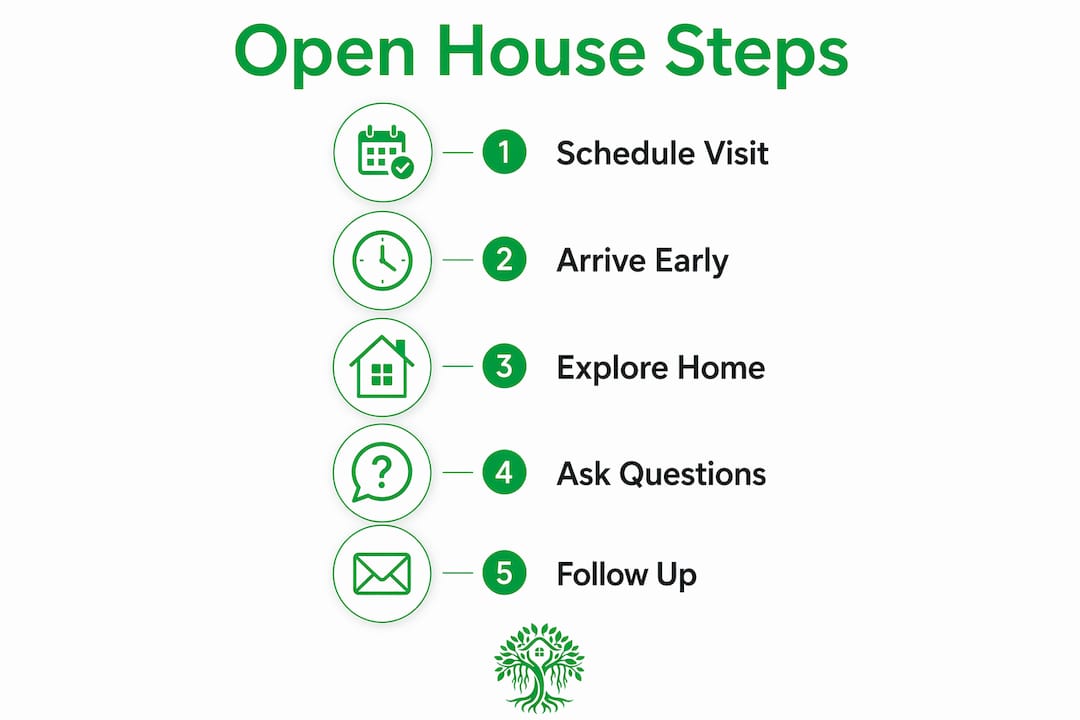
    Infographic outlining the open house process steps

    Preparation separates buyers who convert from those who just browse. Prepared buyers convert offers at rates up to 14%, while casual visitors convert at under 3%. That gap is almost entirely explained by what buyers do before they walk through the door.

    Follow these steps before every open house visit:

    1. Get pre-approved for a mortgage. Pre-approval before open houses helps you receive more candid information from listing agents and strengthens your offer position if you decide to move quickly. In California and Texas markets, homes in desirable zip codes can receive multiple offers within days of listing.
    2. Research the property online. Pull the MLS sheet, check tax records, and run comparable sales in the neighborhood. You want to walk in knowing the list price history, square footage, and lot size before the agent tells you.
    3. Set your personal criteria. Write down your non-negotiables before you tour. Commute distance, school district, minimum bedrooms, and parking requirements should be decided before emotions enter the picture.
    4. Pack the right tools. Bring a smartphone, notepad, and flashlight to every visit. A tape measure helps you verify room dimensions against furniture you already own.
    5. Budget your time. Spend 15–30 minutes per home. Less than that and you miss details. More than that on a first pass and you are probably already emotionally attached.

    Pro Tip: Read the seller’s disclosure statement before you go if it is publicly available. In California, sellers are legally required to disclose known material defects. In Texas, the seller’s disclosure notice covers structural, mechanical, and environmental issues. Knowing what is already disclosed lets you ask sharper follow-up questions at the open house.

    For a broader overview of the full purchase timeline, the first-time homebuyer guide from Ficustree walks you through every step from pre-approval to closing.

    What questions to ask at an open house

    The right questions turn a casual tour into a negotiation advantage. Listing agents have fiduciary duties to sellers, which means they will use any information you volunteer against you in negotiations. Ask questions that reveal seller motivation without revealing yours.

    Focus on these areas:

    • Listing history: How long has the home been on the market? Has the price been reduced? A home sitting for 45 or more days in a hot market signals a problem worth investigating.
    • Seller motivation and timeline: Is the seller flexible on closing date? Are they already under contract on another home? A motivated seller is a negotiating opportunity.
    • System ages and repairs: When was the roof last replaced? How old is the HVAC? What repairs have been done in the last five years? These answers form your inspection contingency baseline.
    • What is included in the sale: Appliances, window treatments, and outdoor fixtures are sometimes excluded. Confirm in writing what stays.
    • HOA details: In California communities like those in Irvine or Rancho Santa Margarita, HOA fees and special assessments can add hundreds of dollars per month to your true cost. In Texas master-planned communities like Cinco Ranch or The Woodlands, the same applies.

    Stay polite and conversational. Remain vague about your budget and timeline when the listing agent asks. Your answers become their leverage.

    Common mistakes buyers make at open houses

    Emotional overattachment is the most expensive mistake first-time buyers make. Buyers who skip financial analysis overpay by $10,000–$25,000 on average. Falling in love with a kitchen before running a PITI calculation (principal, interest, taxes, and insurance) is how buyers end up house-poor.

    Experienced agents stress one rule: do not fall in love without a PITI analysis. Add HOA fees, estimated maintenance, and homeowner’s insurance to get your real monthly number. If that number exceeds 28–30% of your gross monthly income, the home is likely outside your true affordability range regardless of how it looks.

    “Open houses are best used as market research and intel-gathering rather than immediate purchasing decisions.” — Barrett Sotheby’s Realty

    Other common mistakes include:

    • Telling the listing agent you love the home or that it is your top choice
    • Skipping the exterior and only touring the interior
    • Ignoring the neighborhood at the time of day you would actually live there
    • Treating the open house as a final decision rather than a screening tool
    • Failing to schedule a private showing before making an offer

    Open houses are data-gathering opportunities. Serious buyers follow up with private showings and a comparative market analysis before writing an offer. The open house gets you in the door. The private showing is where you decide.

    Understanding the emotional pitfalls of home buying helps you stay objective when a home checks most of your boxes but the numbers are not quite there.

    What to do after an open house visit

    Your work starts when you leave the property. Most buyers take a few photos and forget the details within 48 hours. A systematic review process keeps your search sharp and your decisions clear.

    1. Review your notes and photos the same day. Memory fades fast. Write a brief summary of each home while the details are fresh, including what you liked, what concerned you, and any unanswered questions.
    2. Contact your buyer’s agent. Share your observations and ask them to pull a comparative market analysis for any home you are seriously considering. A buyer’s agent represents your interests exclusively, unlike the listing agent you met at the open house.
    3. Request disclosures and inspection reports. In California, sellers must provide a Transfer Disclosure Statement. In Texas, the Seller’s Disclosure Notice is standard. Read both before scheduling a private showing.
    4. Prioritize homes for private showings. Rank your top two or three properties and schedule private tours within a few days. Markets in the San Francisco Bay Area, Los Angeles, Austin, and Dallas move quickly. Waiting a week can cost you the property.
    5. Prepare to act on offer timing. If a home fits your criteria and the numbers work, understand the offer process in California before you need it. Knowing contingency timelines and escalation clauses in advance keeps you from scrambling when the right home appears.

    Top buyers inspect unseen areas during open houses promptly to detect maintenance issues early. That information becomes your inspection contingency baseline when you write an offer.

    Key Takeaways

    Open houses work best as structured research events, not emotional experiences. Prepared buyers with pre-approval, a clear checklist, and disciplined questioning convert at dramatically higher rates than casual visitors.

    Point Details
    Arrive prepared Get pre-approved and research the property before you walk through the door.
    Protect your leverage Stay vague with listing agents about your budget, timeline, and level of interest.
    Use a physical checklist Bring a smartphone, notepad, flashlight, and tape measure to every visit.
    Follow up fast Review notes the same day and schedule private showings within 48 hours for serious contenders.
    Run the numbers first Calculate PITI plus HOA and maintenance before deciding a home fits your budget.

    What I have learned from watching buyers at open houses

    First-time buyers in California and Texas often walk into open houses the same way they browse online listings. They look at the photos in their heads, not the actual walls in front of them. I have seen buyers spend 45 minutes admiring a renovated kitchen and never once check the water pressure or look at the electrical panel.

    The buyers who get the best outcomes treat every open house like a job interview for the property. They have a list of questions. They check the crawl spaces. They drive the neighborhood at 7 a.m. on a Tuesday, not just on a sunny Sunday afternoon when everything looks perfect. That discipline is what separates a good purchase from an expensive regret.

    The other thing most articles will not tell you: the sign-in sheet is not neutral. When you write your name and phone number on that sheet without noting your buyer agent, you are handing the listing agent permission to follow up with you directly. That is not in your interest. Write your agent’s contact information, or ask your agent to accompany you.

    Open houses are genuinely useful tools when you use them correctly. They compress your market education faster than any app. But they only work if you show up with a plan, not just curiosity.

    — Anand

    Start your search smarter with Ficustree

    https://ficustree.ai

    Ficustree is an AI-powered home buying platform built specifically for first-time buyers in California and Texas. The platform helps you research properties, track open houses, and analyze disclosures before you ever walk through a door. You get hourly showing agents on demand, so you are never touring alone or unrepresented. Buyers pay $1,000 at closing plus 1% commission and keep a rebate of roughly 2% where legally permitted. The premium platform is free to use. If you are ready to turn open house visits into real decisions, start your search at Ficustree today.

    FAQ

    What is an open house in real estate?

    An open house is a scheduled time when a home for sale is open to potential buyers for viewing without an appointment, typically lasting about two hours on weekends.

    Do I need a buyer’s agent to attend an open house?

    You do not need a buyer’s agent to attend, but you should note their contact information on the sign-in sheet to protect your representation and negotiation leverage.

    What should I bring to an open house?

    Bring a smartphone for photos, a notepad for observations, a flashlight to check dim areas, and a tape measure to verify room dimensions against your furniture.

    Can I make an offer at an open house?

    You can express interest, but submitting a formal offer through your buyer’s agent after a private showing and comparative market analysis is the stronger approach.

    How many open houses should I attend before making an offer?

    Attend enough to calibrate your expectations for the local market, then schedule private showings for the two or three homes that best match your criteria and budget.

  • What Is a Listing Agent? A Guide for First-Time Buyers

    What Is a Listing Agent? A Guide for First-Time Buyers

    A listing agent is a licensed real estate professional who represents the seller exclusively throughout a home sale, managing everything from pricing to closing. If you are buying a home in California or Texas, understanding this role is not optional. It shapes every offer you submit, every negotiation you enter, and every disclosure you receive. The listing agent works for the seller, not for you. Knowing that changes how you approach the entire process.

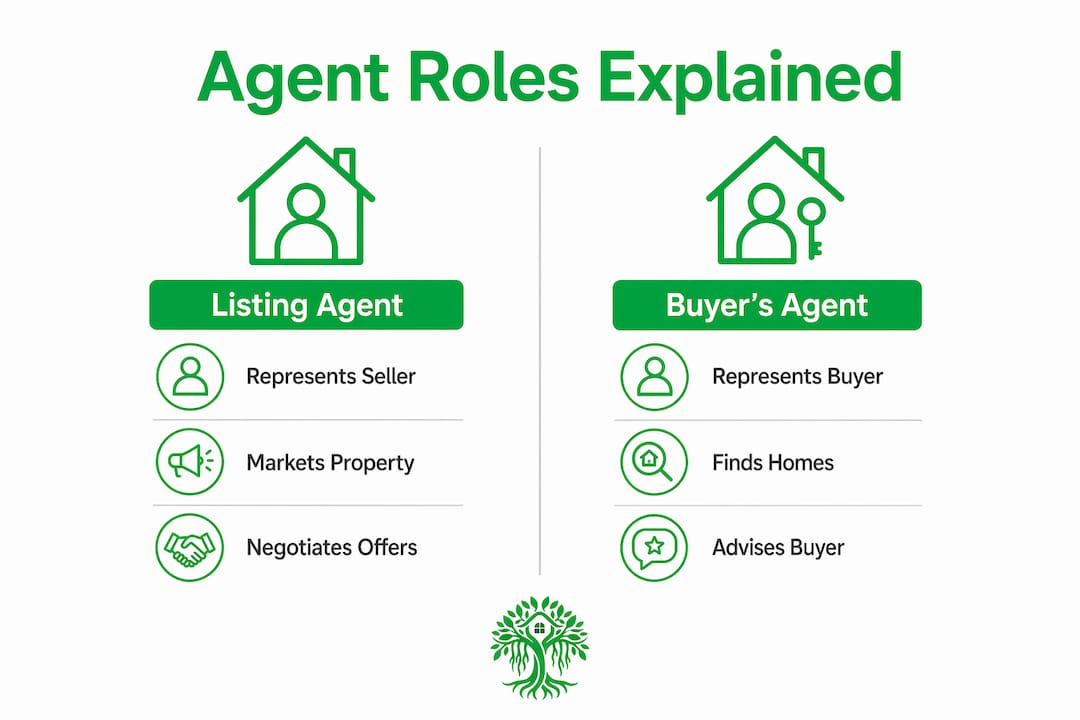
    Infographic comparing listing and buyer's agent roles

    What is a listing agent and what do they actually do?

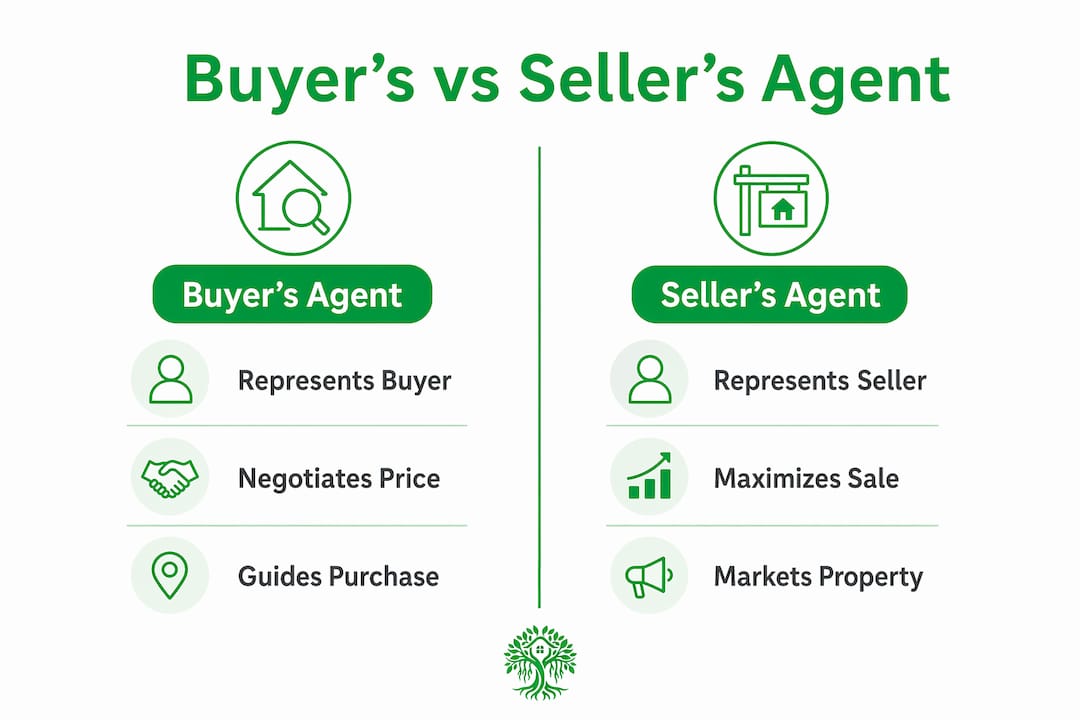
    A listing agent is the seller’s dedicated representative, hired to market the property, attract qualified buyers, and close the sale at the best possible price. The industry also calls this person the seller’s agent. Both terms refer to the same role.

    The relationship begins with a listing agreement, a contract that grants the agent exclusive rights to market and sell the property, typically for a period of 3–6 months. During that window, the agent owes the seller fiduciary duties: loyalty, confidentiality, and careful handling of the seller’s financial interests. Those duties do not extend to you as a buyer.

    Hands signing listing agreement document

    From there, the agent’s responsibilities span pricing, marketing, vetting buyers, managing inspections, and coordinating the final closing. That is a wide scope of work, and each piece directly affects your experience as a buyer on the other side of the transaction.

    What are the key responsibilities of a listing agent?

    The listing agent’s job covers six distinct phases, each with real consequences for buyers.

    • Pricing strategy. The agent runs a Comparative Market Analysis (CMA), reviewing recent sales of similar homes nearby to recommend a listing price. A well-priced home attracts multiple offers. An overpriced one sits on the market and often sells for less in the end.
    • Marketing the home. Agents market homes through MLS and platforms like Zillow and Realtor.com, plus social media and open houses. Quality marketing drives buyer interest and improves the final sale price.
    • Vetting offers. When offers arrive, the agent does not simply pick the highest number. They assess price, contingencies, buyer qualifications, and closing timelines to identify which offer poses the least risk of falling apart.
    • Negotiating terms. The agent negotiates price, repair requests, seller concessions, and closing dates on the seller’s behalf.
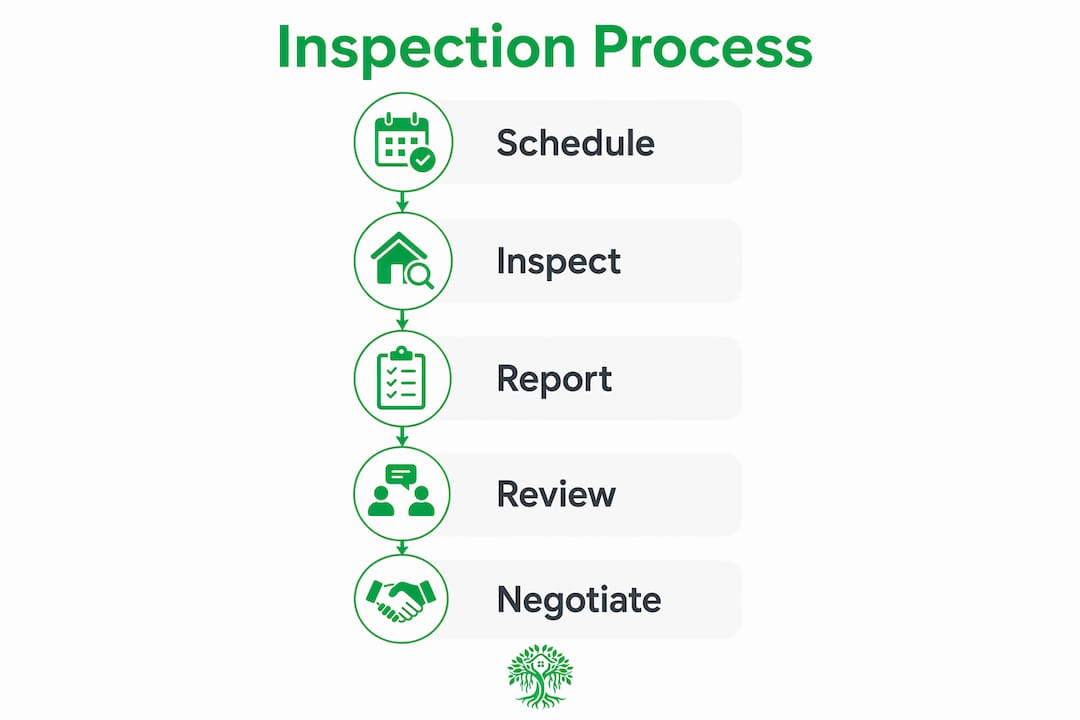
    • Managing inspections and appraisals. After an offer is accepted, the agent coordinates inspections and appraisal scheduling, then advises the seller on how to respond to any findings.
    • Closing coordination. The agent’s role continues until closing, managing financing deadlines, title work, and possession timing.

    Pro Tip: When a listing agent counters your offer with a closing cost credit instead of agreeing to repairs, that is a deliberate tactic. Agents often favor credits over repairs to keep the deal moving and protect the seller’s convenience. Factor that into your offer strategy.

    Experienced listing agents also advise sellers on property improvements that deliver the best return before listing, steering sellers away from costly upgrades that buyers will not pay extra for. That advice shapes the condition of the home you eventually tour.

    Listing agent vs. buyer’s agent: what is the difference?

    The distinction between a listing agent and a buyer’s agent is the most important concept a first-time buyer can understand. These two roles sit on opposite sides of the transaction with opposing goals.

    Factor Listing agent Buyer’s agent
    Who they represent The seller You, the buyer
    Primary goal Maximize the seller’s sale price Get the buyer the best deal
    Fiduciary duty Owed to the seller only Owed to the buyer
    Disclosure obligations Must protect seller’s confidential information Must share all relevant information with buyer
    Who pays them Seller (from sale proceeds) Negotiated, often covered by seller concession

    Listing agents advocate exclusively for the seller’s financial interests. They cannot share information that would disadvantage their seller client during negotiations. That means if the seller is desperate to close quickly, the listing agent is not going to tell you that.

    Many buyers mistakenly assume the listing agent represents their interests. This misunderstanding causes real harm during negotiations. Going directly to the listing agent without your own representation is called dual agency in California, and it creates a conflict of interest that rarely benefits the buyer.

    Hiring your own buyer’s agent gives you someone whose fiduciary duty runs to you. That agent can review disclosures critically, advise on offer strategy, and negotiate repairs without any obligation to protect the seller. For a first-time buyer in California or Texas, that representation is not a luxury. It is a practical necessity.

    How do listing agents price and market a home?

    Pricing is where listing agents earn their keep, and it is also where buyers need to pay close attention. Effective pricing focuses on a competitive yet realistic number that attracts multiple offers, not simply the highest sticker price. A home priced too high sits on the market, collects price reductions, and often sells for less than a correctly priced home would have.

    The CMA compares the subject property to recently sold homes with similar size, condition, location, and features. In California markets like the Bay Area or Los Angeles, comparable sales from the past 90 days carry the most weight. In Texas markets like Austin or Dallas, inventory moves fast enough that 60-day comps are often more relevant.

    Marketing follows pricing. A strong listing agent deploys:

    • Professional photography and, in higher price ranges, video walkthroughs
    • MLS syndication to Zillow, Realtor.com, and regional portals
    • Targeted social media advertising to reach buyers actively searching in the area
    • Open houses and broker tours to generate in-person interest

    Pro Tip: Pay attention to the quality of a listing’s photos and description. A poorly marketed home may be underpriced to compensate, which could signal a motivated seller. A beautifully presented listing with strong marketing signals a confident seller who expects competition.

    The marketing plan a listing agent presents to a seller during the listing presentation reveals their competence and approach. As a buyer, the quality of that marketing affects how many competing offers you face.

    What first-time buyers in California and Texas should know

    Buying in California or Texas means interacting with listing agents constantly, even before you submit a single offer. Here is what you need to keep in mind.

    1. The listing agent’s loyalty is not yours. Every question you ask at an open house, every comment you make about your budget or timeline, can be shared with the seller. The listing agent is required to pass along information that helps their client.
    2. Understand the offer review process. In California, sellers typically review all offers on a set date to encourage competition. In Texas, offers are often reviewed as they arrive. Knowing which approach applies changes your timing strategy. You can learn more about California’s offer process before you submit.
    3. Hire your own representation. A buyer’s agent reviews disclosures on your behalf, advises on contingencies, and negotiates repairs without any obligation to the seller. This is especially important in California, where disclosure packages can run dozens of pages.
    4. Know how contingencies work. Inspection, appraisal, and financing contingencies protect you as a buyer. The listing agent will push to minimize or waive them on the seller’s behalf. Your agent’s job is to protect them for you.
    5. Understand seller concessions. In both California and Texas, buyers can request seller concessions to cover closing costs. The listing agent will negotiate these on the seller’s behalf, so knowing what is reasonable in your market gives you a real advantage.

    How to choose the right listing agent: what buyers can learn from the process

    Sellers choose listing agents through a process called a listing presentation. Understanding what a good listing agent looks like helps you recognize whether the seller’s agent across the table is skilled or not.

    • Local market knowledge. A strong listing agent knows recent sales, active competition, and neighborhood trends. In California, that means understanding school ratings, HOA rules, and disclosure norms. In Texas, it means knowing flood zone designations and property tax implications.
    • A clear marketing plan. Competent agents arrive at listing presentations with a written marketing plan, not a verbal promise. That plan should include MLS strategy, photography, and a timeline.
    • A verifiable track record. Days on market, list-to-sale price ratios, and the number of transactions closed in the past 12 months all reveal agent performance. Ask for these numbers.
    • Communication style. A responsive agent moves transactions forward. An unresponsive one creates delays that cost both sides money.
    • Negotiation skill. The best listing agents do not just accept the first offer. They manage multiple offers, create competition, and protect the seller’s bottom line. That skill works against you if you do not have equally skilled representation.

    Understanding how real estate commission works also helps you see why agent incentives matter. Commission structures affect how motivated an agent is to close quickly versus hold out for a better offer.

    Key takeaways

    A listing agent represents the seller exclusively and owes no fiduciary duty to the buyer, making independent buyer representation the single most protective step a first-time buyer can take.

    Point Details
    Listing agent loyalty The listing agent works for the seller only and cannot share information that harms the seller’s position.
    Offer evaluation Agents assess price, contingencies, and buyer qualifications together, not just the highest number.
    Marketing drives competition Strong marketing on Zillow, MLS, and social media increases buyer competition and raises the final sale price.
    Buyer representation matters Hiring your own buyer’s agent gives you fiduciary protection the listing agent cannot provide.
    Post-inspection tactics Listing agents often push for closing cost credits instead of repairs to protect the seller’s timeline.

    Why buyers who understand listing agents win more negotiations

    Most first-time buyers walk into open houses and treat the listing agent like a neutral resource. That is the single most expensive mistake I see. The listing agent is a skilled professional whose entire job is to get the seller the best outcome possible. Treating them as a helpful guide puts you at a structural disadvantage before you even write an offer.

    What I have found is that buyers who understand the listing agent’s role stop volunteering information they should not. They stop asking the listing agent for advice on what to offer. They stop assuming the agent will flag problems in the home. Once you internalize that the listing agent is the seller’s advocate, your behavior at open houses, your questions during tours, and your offer strategy all change for the better.

    The other thing worth saying plainly: the listing agent is not your enemy. They are doing their job. The answer is not to distrust them but to match their representation with your own. A good buyer’s broker levels the playing field completely. You get someone who reads the disclosures looking for problems, not reassurances. You get someone who knows when to push on repairs and when to take the credit. That is the difference between a buyer who closes with confidence and one who discovers surprises after move-in.

    In California and Texas, where transactions move fast and the stakes are high, knowing who is in the room and whose side they are on is not paranoia. It is preparation.

    — Anand

    How Ficustree helps California and Texas buyers stay informed

    https://ficustree.ai

    Ficustree is built for first-time buyers in California and Texas who want clarity, not confusion. The platform gives you AI-powered search that matches homes to your actual priorities, not just your price range. You get on-demand showing agents, disclosure analysis support, and buyer representation at $1,000 plus 1% at closing, with a rebate of roughly 2% where permitted. You do not need to figure out listing agent dynamics alone. Ficustree puts a knowledgeable advocate in your corner from the first search to the final signature. Start your search and see how much clearer the process gets when the house finds you.

    FAQ

    What is a listing agent in simple terms?

    A listing agent is a licensed real estate agent hired by the seller to market the home, negotiate offers, and manage the sale from listing to closing. They represent the seller’s interests exclusively.

    Does a listing agent represent the buyer too?

    No. A listing agent owes fiduciary duties to the seller only. Buyers who work directly with a listing agent without their own representation give up the right to unbiased advice and negotiation support.

    How is a listing agent paid?

    The listing agent is typically paid a commission from the sale proceeds at closing. The total commission is negotiated in the listing agreement and is usually split between the listing agent and the buyer’s agent.

    Can a listing agent show me homes I want to buy?

    A listing agent can show you the specific home they represent, but they cannot act as your buyer’s agent on that same transaction without creating a dual agency conflict. In California, dual agency requires written consent from both parties.

    What should I never say to a listing agent at an open house?

    Do not share your maximum budget, your move-in urgency, or any personal motivation for buying. The listing agent is required to pass information that benefits the seller to their client, and those details can be used against you in negotiations.

  • Common Home Offer Negotiation Mistakes to Avoid

    Common Home Offer Negotiation Mistakes to Avoid

    Common home offer negotiation mistakes are avoidable errors that cause first-time buyers to lose money, miss opportunities, or watch accepted offers fall apart before closing. In California and Texas, where competitive markets and evolving regulations add pressure, these mistakes carry real financial consequences. The industry term for this discipline is offer negotiation strategy, and mastering it means understanding preparation, emotional control, legal details, and market-specific tactics. This article breaks down the most frequent home buying negotiation errors so you can walk into your next offer with clarity and confidence.

    1. Common home offer negotiation mistakes start with poor preparation

    Preparation is the foundation of every successful offer. Without it, you are negotiating blind.

    The most damaging first step is touring homes without mortgage pre-approval. Skipping pre-approval can cost you $5,000–$40,000 in lost opportunities when a seller chooses a ready buyer over you. Sellers in San Jose and Austin treat pre-approval as a baseline requirement, not a bonus.

    Hands with mortgage pre-approval letter and house keys

    Equally costly is failing to research comparable sales before writing an offer. Without recent comps, you have no anchor for your opening bid. You either overpay or insult the seller with a number that has no market basis.

    A third preparation gap that many first-time buyers miss is the post-August 2024 NAR settlement requirement. Since that rule change, buyers must clarify agent compensation in writing before touring homes. On a $400,000 home, failing to document this upfront can expose you to $12,000–$25,000 in out-of-pocket agent fees. That is not a technicality. It is a financial risk you can eliminate with one signed agreement.

    • Get pre-approved, not just pre-qualified, before your first showing
    • Pull at least three recent comparable sales within one mile and six months
    • Sign a written buyer-agent agreement that specifies compensation before you tour

    Pro Tip: Ask your agent to show you the exact language in your buyer-agent agreement that covers their compensation. If they cannot explain it clearly, that is a signal to ask more questions before signing.

    2. What role does emotion play in home offer negotiation mistakes?

    Emotion is the single most expensive variable in a home offer. It is also the hardest to control when you have toured 30 homes and finally found one you love.

    Emotional bidding in competitive markets routinely leads to buyers overpaying by $30,000–$100,000. That range is not an outlier. It reflects what happens when buyers stop anchoring to market value and start anchoring to fear of losing. In California markets like Los Angeles and the Bay Area, bidding wars are common. In Texas markets like Austin and Dallas, they still occur in desirable zip codes.

    The fix is a walk-away number set before you make any offer. Write it down. Share it with your agent. Treat it as a contract with yourself.

    Here are the most common emotional pitfalls buyers fall into:

    1. Revealing your maximum budget to the seller’s agent
    2. Making a second offer the same day after a rejection without new information
    3. Responding to a counteroffer within minutes, which signals desperation
    4. Skipping the inspection because you are afraid to lose the deal
    5. Letting a seller’s deadline pressure you into dropping contingencies

    “Negotiations start with behavior, not the offer. Showing too much enthusiasm signals willingness to overpay and weakens your leverage.” — Real Estate Negotiation Strategies: The 2026 Playbook

    Hostile attitudes create a different problem. Collaborative, respectful approaches yield better outcomes than aggressive tactics. Sellers are people. They choose buyers they trust to close, not buyers who feel adversarial.

    Pro Tip: Before submitting any offer, write down your walk-away price on a sticky note and put it on your monitor. Every counteroffer decision should start by looking at that number.

    Waiving a home inspection to win a bidding war is one of the most common real estate negotiation pitfalls in California and Texas. It feels like a competitive move. It is actually a financial gamble with no upside.

    A standard home inspection costs $400–$750. That pre-offer inspection gives you documented evidence of the home’s condition before you write your offer. In competitive markets, this is a strategic advantage. You can make a strong offer with fewer contingencies because you already know what you are buying. You are not guessing.

    Buyers who skip inspections and discover problems after closing have no negotiating recourse. A cracked foundation, faulty electrical panel, or aging HVAC system can cost $10,000–$50,000 to repair. None of that is recoverable once you close without an inspection contingency.

    The legal side carries equal risk. Around 5% of real estate transactions fall through due to financing issues or buyer credit changes before closing. That fallout rate represents real buyers who lost their earnest money deposits and had to restart their search.

    Mistake Risk Prevention
    Waiving home inspection $10,000–$50,000 in undisclosed repairs Order a pre-offer inspection for $400–$750
    Skipping financing contingency Loss of earnest money deposit Keep financing contingency in all offers
    Unsigned buyer-agent agreement $12,000–$25,000 in surprise agent fees Sign written compensation agreement upfront
    Ignoring disclosure documents Legal liability post-closing Review all California buyer disclosures carefully

    Post-2024 NAR settlement rules also require written compensation agreements with buyer agents. Misunderstanding these buyer-agent agreement rules can result in surprise fees that derail your budget at closing.

    4. How to negotiate price and terms without common pitfalls

    Price is only one variable in a home offer. Buyers who negotiate only on price leave significant value on the table.

    Successful negotiations rely on understanding seller motivations and structuring trade-offs across multiple terms. A seller who needs 60 days to move out values a flexible closing date more than a slightly higher price. A seller who has already bought their next home wants certainty and speed. Knowing which situation you are in changes your entire strategy.

    Here are the terms worth negotiating beyond purchase price:

    • Closing costs: Ask the seller to contribute 2%–3% toward your closing costs. This reduces your cash-to-close without changing the purchase price.
    • Repair credits: Instead of asking for repairs, request a dollar credit at closing. Sellers prefer this because it avoids contractor scheduling.
    • Moving timeline: Offering a rent-back period of 30–60 days can make your offer more attractive to sellers who need time to relocate.
    • Home warranty: Request a one-year home warranty paid by the seller. It costs them $400–$600 and gives you real protection.

    One tactic most buyers overlook is negotiating lender credits. By accepting a slightly higher mortgage interest rate, you can receive lender credits covering $3,000–$6,000 in closing costs. This works especially well when you are cash-constrained at closing but have strong monthly income.

    Communication method also matters. Phone calls build rapport and allow real-time negotiation. Text and email create a paper trail but lose tone. For sensitive counteroffers, a phone call from your agent to the listing agent often moves deals forward faster than a written response.

    Pro Tip: Ask your lender to run two scenarios: one with standard rate and full closing costs, one with a slightly higher rate and lender credits. The second option often makes more financial sense for buyers who plan to refinance within five years.

    5. California vs. Texas: How market conditions shape negotiation errors

    The same mistake plays out differently depending on which state you are buying in. Understanding local market conditions is part of avoiding home buying negotiation errors.

    Mistake California context Texas context
    Skipping pre-approval Bay Area and LA sellers reject unverified buyers immediately Austin and Dallas sellers expect pre-approval but may allow 24-hour grace
    Emotional overbidding Common in San Francisco, San Jose, and Los Angeles bidding wars More common in Austin; less pressure in Houston and San Antonio
    Waiving inspection Frequently requested in competitive CA markets; high risk given older housing stock Less common but still risky given Texas weather-related issues like foundation movement
    Ignoring agent fee agreements Post-NAR settlement compliance is strictly enforced in California Texas follows same federal rules; local customs vary by market
    Neglecting seller motivation CA sellers often prioritize certainty of close over price TX sellers in slower markets may prioritize price; faster markets mirror CA dynamics

    California’s housing stock tends to be older, which makes inspection waivers especially risky. Texas homes face different structural risks, particularly foundation movement from expansive clay soils in Dallas and Houston. Both states reward buyers who do their homework before writing an offer.

    For a deeper look at the California offer process, the steps from offer to acceptance carry state-specific disclosures and timelines that differ from Texas contracts.

    Key takeaways

    The most costly home offer negotiation mistakes share one root cause: entering the process without a clear strategy, a firm budget, and documented agreements.

    Point Details
    Pre-approval is non-negotiable Missing pre-approval costs buyers $5,000–$40,000 in lost opportunities.
    Emotion drives overpayment Emotional bidding leads to overpaying by $30,000–$100,000 in competitive markets.
    Inspections protect your budget A $400–$750 pre-offer inspection prevents five-figure repair surprises after closing.
    Agent agreements must be in writing Post-2024 rules require written buyer-agent compensation agreements to avoid surprise fees.
    Negotiate terms, not just price Closing costs, repair credits, and lender credits add significant value beyond the purchase price.

    What I have learned watching buyers negotiate

    The buyers who struggle most in negotiations are not the ones who lack information. They are the ones who know the facts but cannot stay detached when it counts.

    I have seen buyers with solid pre-approvals and good comp research completely unravel in a bidding war. They hit their walk-away number, then go $15,000 over it because the listing agent mentioned “another offer coming in tonight.” That phrase is designed to create urgency. Sometimes it is real. Often it is not. The buyers who hold their number are the ones who sleep well after closing.

    The other pattern I see consistently is buyers treating the negotiation as a battle. They want to “win.” But the seller is not your opponent. They are a person who needs to trust that you will close. Hostile negotiation attitudes stall deals. Respectful, clear communication closes them.

    My honest advice: write down your maximum price before every offer. Treat your inspection contingency as sacred unless you have already done a pre-offer inspection. And read every line of your buyer-agent agreement before you sign it. The true cost of homeownership includes the mistakes you make on the way to the keys, not just the mortgage payment after.

    — Anand

    How Ficustree helps you avoid these mistakes

    First-time buyers in California and Texas do not need more listings. They need better decisions. Ficustree is built for exactly that.

    https://ficustree.ai

    Ficustree’s AI-powered platform gives you real-time comparable sales data so your offer is anchored to the market, not to emotion. The platform flags inspection contingency risks, walks you through buyer-agent agreement requirements post-2024, and helps you model offer scenarios across price, credits, and closing timelines. You get hourly showing agents on demand, pay just $1,000 at closing plus 1% commission, and keep a rebate of roughly 2% where permitted. No confusion, no surprise fees. Start making smarter offers at ficustree.ai.

    FAQ

    What is the most common home offer negotiation mistake?

    The most common mistake is submitting an offer without mortgage pre-approval. This signals unpreparedness to sellers and can cost buyers $5,000–$40,000 in lost opportunities.

    Should I waive the home inspection to win a bidding war?

    Waiving an inspection is a high-risk move. A pre-offer inspection costing $400–$750 gives you the same competitive edge without exposing you to five-figure repair costs after closing.

    How do buyer-agent agreement rules affect my negotiation in 2026?

    Since August 2024, buyers must have written compensation agreements with their agents before touring homes. Without this, you risk paying $12,000–$25,000 in unexpected agent fees on a $400,000 purchase.

    How can I negotiate beyond the purchase price?

    Ask for seller contributions to closing costs, repair credits, a flexible closing timeline, or a home warranty. Negotiating lender credits can also cover $3,000–$6,000 in closing costs by accepting a slightly higher mortgage rate.

    Do negotiation mistakes differ between California and Texas?

    Yes. California’s competitive urban markets and older housing stock make inspection waivers and emotional overbidding especially costly. Texas buyers face different risks, including foundation issues in Dallas and Houston, and varying seller expectations by market.

  • Top 4 Ownify.com Alternatives for 2026

    Top 4 Ownify.com Alternatives for 2026

    Finding a platform that represents buyers and reduces closing costs with clear fee and rebate structures is harder than it should be. Many platforms only operate in select states or restrict rebates, forcing buyers to coordinate multiple services or miss out on savings. This comparison covers rebates, fee models, and coverage so you can choose a home buyer representation platform that aligns with your savings goals.

    Table of Contents

    Ficustree

    https://ficustree.ai

    At a Glance

    Ficustree’s marketing materials state AI-guided home matching within 30 seconds. That fast match pairs with disclosure analysis and buyer incentives, including up to 2% cashback at closing where permitted. The platform represents buyers directly, with buyers paying $1,000 at closing plus 1% commission and access to hourly showing agents on demand.

    Core Features

    Ficustree combines explainable matching with a Disclosure AI that flags documents and highlights potential issues for buyers. The platform offers end-to-end transaction support, mortgage and affordability calculators, and neighborhood insights that aim to clarify monthly and upkeep costs. Buyers get the premium platform free while independent realtors can use tiered subscription plans and success fee options.

    Key Differentiator

    Ficustree pairs algorithmic recommendations with buyer representation and a cash incentive model. That combination lets you see curated matches quickly while still getting human support through tours and closing. The product focuses on first-time buyers in California and on giving clear cost estimates, not just listing matches.

    Pros

    The platform centers first-time buyers with tools that explain ownership costs and simplify offer decisions. Cashback incentives and a buyer-side fee model can lower your net cost of representation when a transaction closes. Built-in calculators, disclosure review, and on-demand showing agents reduce the number of separate services you must coordinate during a purchase.

    Cons

    • Available to consumers only in California; other states are on a waitlist and not currently supported.

    Who It’s For

    This fits first-time home buyers in California who want fast, AI-assisted matching plus human showings and buyer representation. It also suits independent realtors who need a single platform for CRM, lead handling, and client affordability work. Buyers outside California or those who want full traditional agent services may find the coverage and model limiting.

    Unique Value Proposition

    Buyers pay $1,000 at closing plus 1% commission and can retain a rebate of roughly 2% where law allows. That pricing model reduces upfront broker friction and makes the platform’s tools free for buyers. For a person balancing tight budgets and learning the process, the combined cash incentive and explainable tools change how much you pay for guidance and how quickly you can act on listings.

    Real World Use Case

    A first-time buyer in California uses Ficustree to generate matched listings, book hourly showing agents, and run disclosure analysis before making an offer. The platform’s calculators estimate true monthly costs including insurance and HOA, helping the buyer avoid surprises. The buyer closes and receives the platform rebate where permitted, offsetting representation costs.

    Pricing

    The premium platform is free for buyers, who still pay $1,000 at closing plus 1% commission and may receive roughly 2% cashback where allowed. Realtor subscriptions run Starter at $399 per month, Professional at $1,000 per month, and Elite at $1,500 per month with different success fee arrangements.

    Website: https://ficustree.ai

    Perch

    https://perchnow.com

    At a Glance

    Perch advertises a mix of AI-driven market analysis and an agent bidding marketplace to lower fees, and it supports commission rebate negotiation for buyers. The service targets buyers who want a data-backed offer and the ability to invite agents to compete on price. That mix shifts some negotiation power to buyers who research and act independently.

    Core Features

    Perch combines AI market signals with a competitive bidding mechanism where agents submit offers to represent a buyer. The platform provides market insights, a competitive offer score, and tools for agents to bid and for buyers to negotiate rebates and cash back. It also matches qualified buyers with agents and routes leads to brokerages looking for ready-to-act clients.

    Key Differentiator

    The defining feature is the agent bidding model layered on top of automated analysis. Perch pairs an AI score that estimates offer strength with a live bidding environment for agents. That pairing aims to reduce buyer costs by creating price competition among agents while keeping the purchase strategy grounded in data.

    Pros

    Perch leans into cost savings and transparency by making agent fees negotiable and by highlighting potential cash back incentives. Its AI scoring gives buyers a quick, measurable sense of offer strength, and the matching tools connect motivated buyers with agents who respond to bids. The platform also supports agents and brokerages with lead generation, which can speed responses for buyers ready to make offers.

    Cons

    • Third-party reviews report limits in the AI accuracy and depth of market insights, and results may vary by market.
    • Buyer and agent experience can differ considerably across regions, so responsiveness is uneven.
    • Agent bidding and rebate features may not be available in all areas, limiting savings for some buyers.

    When It May Not Fit

    Perch is not a good match if you need full-service local representation tied to long-standing neighborhood networks. The bidding model favors buyers who can research and negotiate, and it assumes agent availability in your market. Buyers who prefer a single dedicated agent with deep local ties may find the marketplace approach fragmented.

    Who It’s For

    Perch fits independent, tech-savvy homebuyers who want to negotiate agent fees and compare offer strength quickly. It also suits agents and brokerages seeking qualified leads and a channel to bid on motivated buyers. First-time buyers comfortable with data and an auction-style agent process will get the most from the platform.

    Real World Use Case

    A buyer pulls Perch market insights to set an offer price and posts the opportunity for agent bids. Agents submit representation offers and rebate terms, and the buyer reviews the offer strength score alongside proposed fees. The buyer selects an agent who offers a lower commission plus a cash back incentive, then proceeds with a data-backed competitive offer.

    Website: https://perchnow.com

    Ownify

    https://ownifybricks.com

    At a Glance

    Ownify reports a 52% prospect engagement rate. That figure stands far above typical cold outreach response levels and is the most striking claim in the product data. The platform combines an AI mortgage officer with lease and fractional ownership structures to drive those interactions. These elements position Ownify as a specialist tool for lenders and investors focused on conversion and complex ownership workflows.

    Core Features

    Ownify bundles an AI mortgage loan officer called Owen with tools for fractional ownership and the Progressive Ownership Lease system. The platform also generates branded, compliant PDF homeownership plans and recordable legal documents for lease-to-ownership programs. Personalized loan and homeownership options are research backed and meant to automate routine borrower engagement and documentation.

    Key Differentiator

    The product centers on personalized homeownership plans paired with novel lease structures. That combination is pitched as the reason for the high engagement figure. It targets lenders and investors who want software that ties lead response directly to ownership pathways and legal documentation.

    Pros

    Ownify reports a high engagement rate, which suggests the outreach and personalization layers perform well. The platform automates complex mortgage and lease tasks, reducing manual document creation and follow up. It supports multiple stakeholders including mortgage lenders, real estate investors, and landlords while offering white labeled legal templates that firms can customize. The founding team includes experienced people from finance, real estate, and product management.

    Cons

    • Limited public case studies or customer success metrics make it hard to verify long term outcomes.

    • Pricing is a one-time $500 per property license fee, which may feel expensive for small portfolios.

    • The legal templates require licensing and may need jurisdiction specific review before use in some markets.

    When It May Not Fit

    Small landlords or sole proprietors who manage a handful of units may find the per property fee too steep. Teams that need open benchmarks and independent case studies will find public evidence limited. Firms operating in tightly regulated states should plan for additional legal review of the recordable documents.

    Who It’s For

    Forward-thinking mortgage lenders, real estate investors, and landlords who want AI driven borrower engagement and structured lease-to-own programs. The product suits companies ready to license legal templates and to run programmatic ownership or fractional models. It fits sellers who prioritize conversion over a low upfront tooling cost.

    Real World Use Case

    A mortgage lender routes incoming leads to Owen to auto-respond and generate tailored loan plans. The lender uses the generated PDFs and recordable lease documents to present lease-to-own offers quickly, increasing follow up and shortening decision cycles.

    Pricing

    Ownify charges a one-time license fee of $500 per property. There are no tiers listed in the product data; legal template licensing is part of that model and may add review costs.

    Website: https://ownifybricks.com

    Homa

    https://tryhoma.com

    At a Glance

    According to the company, Homa credits up to 2% cash back of the purchase price to buyers at closing. That rebate represents most of the traditional buyer agent commission returned to the buyer. Homa operates in Florida and Texas while combining AI tools with licensed broker support.

    Core Features

    Homa pairs AI-powered property analysis and insights with human review from licensed brokers who handle offers and negotiations. The service includes on-demand home tours with local guides and dedicated closing coordinators who manage paperwork and timelines. A transparent flat fee underpins the model and buyer credits appear at closing when seller compensation applies.

    Key Differentiator

    Homa returns most of the buyer agent commission to buyers while keeping licensed brokers in the workflow. That mix shifts fee dollars back to the buyer while retaining broker oversight for offers and closing. The platform emphasizes predictable fees and visible credits instead of traditional percentage-based buyer commissions.

    Pros

    Homa reduces what buyers pay in agent commissions, which can make initial affordability clearer, and the flat fee brings predictable closing costs. Its tools support self-guided searches with AI analysis, and licensed brokers step in to review offers and negotiate when needed. On-demand tours and dedicated closing coordinators cut friction during the final stages of a purchase.

    Cons

    • Available only in Florida and Texas currently, limiting reach for out-of-state buyers.

    • Dependent on the seller offering buyer-side compensation, so the rebate is not guaranteed on every transaction.

    • Savings vary with purchase price and contract terms, so actual cash back can differ widely.

    • Limited to markets with active MLS listings and seller cooperation, reducing fit in niche or off-market deals.

    When It May Not Fit

    If you plan to buy outside Florida or Texas, Homa will not serve you. If you expect guaranteed rebates regardless of seller cooperation, this model will disappoint. If your purchase relies on off-market listings or unusual seller terms, Homa’s credit model may not apply.

    Who It’s For

    Homa fits homebuyers in Florida and Texas who want lower transaction costs and clear fees. First-time buyers who want technology to support a self-guided search while retaining broker review will find this appealing. Buyers who need broad national coverage or guaranteed rebates regardless of seller cooperation should look elsewhere.

    Real World Use Case

    The company describes a first-time buyer in Tampa who used Homa to search, tour, analyze, and make offers while working with licensed brokers. That example reports savings of over $10,000 in commissions on the purchase. The workflow shows how AI analysis and broker negotiation can combine in a low-fee model.

    Pricing

    Homa charges a flat 1% fee paid at closing, and most of the buyer agent commission is credited back to the buyer when seller compensation is available. The flat fee creates predictable closing costs compared with traditional percentage fees.

    Website: https://tryhoma.com

    Comparison of alternatives

    Ficustree excels in providing a unique blend of AI-driven home matching, full buyer representation, and cashback incentives, offering distinct value compared to similar platforms. The analysis below examines key differences in operational focus and unique functionalities across four noteworthy competitors: Ficustree, Perch, Ownify, and Homa.

    Distinctly advantageous dimensions among alternatives

    • Ficustree distinguishes itself with its explicit focus on providing first-time homebuyers with both technological and human assistance. Buyers at closing may pay competitive rates, accessing vital resources such as disclosure analysis.

    • Perch’s competitive edge lies in its inclusion of an agent bidding model. This appeals to autonomous buyers who prioritize cost-savings by encouraging price-based competition between agents.

    • Ownify applies itself well in complex ownership situations, including introducing fractional ownership models and generated legal frameworks, slightly broadening its audience to professionals within financial real estate sectors.

    Trade-offs and Specific Benefits by Scenario

    Perch would better suit tech-savvy independent home buyers who value negotiation flexibility greater than facilitated localization from individual representation. Ownify demonstrates substantial benefits to sector investors focusing on retention and integration during lease or mortgage innovation processes.

    Best fit

    • Buyers desiring AI-driven buyer representation for match optimizations along with transparent pricing.
    • Independent homebuyers focusing on agent bidding functionality for direct savings.
    • Large-scale investors or mortgage solutions implementing a broader take on legal documentation delivery.

    Our pick

    Buyers benefiting from industrial cashback advantages during home acquisitions and allowances.Feeling operational bounds end high absolute capacities governance assimilation oversight duplication standards priorities confidently.*Notice chapter long-adferenced verifications.

    This overview highlights the platforms’ core offerings, distinguishing features, and target users to facilitate a well-suited choice.

    Platform Key Differentiator Best For Pricing Limitation
    Ficustree Rapid AI matching and buyer cashback First-time buyers in California $1,000 closing fee + 1% commission Currently available only in California
    Perch Agent bidding marketplace with AI tools Buyers negotiating agent fees Not disclosed Regional market differences affect experience
    Ownify AI-driven engagement for lenders Lenders and real estate investors $500 per property license fee Limited public benchmarks available
    Homa AI with licensed broker rebate model Buyers in Florida and Texas 1% flat closing fee Limited to specific states and seller terms

    Discover a Clear, Cost-Effective Alternative to Ownify.com with Ficustree

    If you find Ownify.com’s per-property fees and complex lease options overwhelming, Ficustree offers a straightforward, buyer-focused approach. Designed for first-time buyers in California and Texas, Ficustree combines AI-powered home matching with direct buyer representation—all for a simple $1,000 closing fee plus 1% commission. You also receive commission rebates where allowed, plus on-demand showing agents to guide property visits.

    Make better decisions faster with tools that explain affordability and disclosure risks clearly. Ficustree aims to replace confusion with clarity so you can focus on what matters: finding the right home and saving money. See how you can reduce upfront costs and gain confidence by visiting Ficustree.ai and start your search with AI-powered insights today.

    Explore Ficustrees platform and understand how buyer representation works to take control of your home purchase journey.

    FAQ

    What features make Ficustree ideal for first-time homebuyers?

    Ficustree offers AI-guided home matching that delivers results in under 30 seconds. Its combination of disclosure analysis and up to 2% cashback at closing empowers buyers to make informed decisions. This means first-time homebuyers can easily navigate the complexities of purchasing their first home while benefiting from potential savings.

    How does Ficustree compare with Perch for agent bidding systems?

    Perch provides a unique agent bidding marketplace that allows buyers to negotiate agent fees effectively, fostering a competitive environment for representation. Ficustree, on the other hand, focuses on fast AI matching and buyer representation, which suits buyers looking for a quick and supported start to their home search instead of a bidding process.

    Can I get on-demand showing agents with Ficustree?

    Yes, Ficustree offers on-demand showing agents to assist buyers at any time. This feature enhances the homebuying experience by providing flexible access to properties, allowing buyers to explore listings more conveniently.

    Does Ficustree support independent realtor subscriptions?

    Ficustree includes tiered subscription plans for independent realtors, which allow them access to various tools and success fee options. This provides independent agents with essential resources to better serve their clients while maximizing their potential earnings.

    What should I know about pricing if I use Ficustree?

    Ficustree charges buyers $1,000 at closing plus a 1% commission. Buyers can benefit from rebates that may amount to roughly 2% where permitted, making this a financially viable option for those looking to minimize upfront costs.

    Is Ficustree available in all states?

    Currently, Ficustree is only available to consumers in California, limiting access for buyers in other states. This exclusivity means that buyers outside California may need to consider other alternatives for homebuyer representation.

  • Top 3 gohouse.ai Alternatives 2026

    Top 3 gohouse.ai Alternatives 2026

    Choosing the right AI-powered decision support tool for home buying is confusing when platforms blend pricing, guidance, and data features in different ways. Many existing platforms hide true costs behind commissions, limit decision support by region, or require jumping between separate apps for analysis and offers. This comparison covers pricing, support features, and data access across top alternatives so you can choose one that fits your process without guesswork.

    Table of Contents

    Ficustree

    https://ficustree.ai

    At a Glance

    According to the company, buyers pay $1,000 at closing plus 1% commission and can retain roughly 2% rebate where legally permitted. That fee structure sits alongside a promise that buyers use the premium platform at no upfront cost. The product focuses on guided support for buyers in California and Texas, with tools aimed at reducing confusion and speeding decisions.

    Core Features

    • AI-guided home matching that aligns listings with lifestyle and preference data.
    • Neighborhood insights with safety information, school ratings, and local amenities.
    • Disclosure document summarization and analysis to highlight risks and maintenance items.
    • Lender and service provider matching for inspection, insurance, and title services.
    • End to end support covering search, tours, offer preparation, and closing stages.
    • Educational calculators including mortgage, affordability, and true cost of ownership.

    Key Differentiator

    The platform combines emotionally aware AI with buyer representation and a cash back incentive. That focus on emotional intelligence aims to make recommendation signals easier to trust and act on. The product ties those recommendations to practical tools for offers, disclosures, and closing support.

    Pros

    • Offers clear buyer pricing and a rebate model. The company discloses the $1,000 closing fee and the roughly 2% rebate where allowed, which simplifies cost comparisons.

    • Provides guided, step by step tools from search to closing. The suite includes calculators, disclosure summaries, and neighborhood scoring for practical decision making.

    • Packs neighborhood data and school ratings into each home match. That reduces guesswork about commute, safety, and local services.

    • Supports independent agents with lead management, CRM features, and a unified platform for handling clients. Agents can run listings and client workflows without bolt on systems.

    • Matches buyers to lenders and local service providers. That keeps inspections, insurance, and title work coordinated under one workflow.

    Cons

    • Limited geographic coverage: several features and in person services are limited outside California, so buyers elsewhere may get a partial experience.

    Who It’s For

    Ficustree fits first time buyers who want an AI assisted, guided buying experience with clear cost signals. The product also suits independent real estate agents who want a single platform for leads, client management, and closing workflows. The focus is strongest for buyers in California and Texas.

    Unique Value Proposition

    Hourly showing agents on demand and direct buyer representation change how you work with the market. That service model reduces the need for a full time listing agent during early tours. Combined with the platform access at no upfront buyer cost, you get guided search, support during offers, and someone to run showings by the hour.

    Real World Use Case

    A first time buyer narrows preferences in the platform and receives AI matched homes prioritized by neighborhood safety and commute time. The system flags critical items in disclosures before inspection. The buyer books hourly showing help, writes an offer through the platform, and closes while keeping the advertised rebate.

    Pricing

    According to the company, buyers use the premium platform for free while agents pay tiered subscription plans starting at $399 per month plus success fees for leads. The seller and agent economics include a buyer closing fee and commission structure that the vendor discloses.

    Website: https://ficustree.ai

    Rockhood.ai

    https://rockhood.ai

    At a Glance

    Free for consumers. Rockhood.ai pairs data and human review to give members market signals, valuations, and goal-focused guidance. The community side emphasizes expert contributors who explain assumptions so you can judge the numbers yourself. That mix makes it useful when you want transparent reasoning rather than a single price figure.

    Core Features

    Rockhood.ai organizes decision support inside a member community and expert network. Key capabilities include:

    • Unbiased, data-driven guidance: models and community commentary that separate market signals from sales pressure.
    • Real time market intelligence: local trend feeds and alerts members when comps or inventory shift.
    • Professional grade property valuations: methodology is explained so members can test assumptions.
    • Personalized, pace controlled decision support: members set how fast they move and what signals matter.
    • AI insights plus human expertise: algorithmic analysis gets reviewed and annotated by real agents and analysts.

    Key Differentiator

    Rockhood.ai stands out because it combines algorithmic analysis with human review inside a community format. The site surfaces model outputs and then attaches expert notes and discussion threads. That approach helps buyers see both the raw data and the reasoning that produced a valuation.

    Pros

    • Honest, data driven advice that appears aimed at reducing agent bias and sales framing. The platform presents numbers first and commentary second.

    • Local market feeds keep members informed about shifting inventory and price trends. That helps you choose timing in tight markets.

    • Transparent valuations with clear methodology let you test assumptions. You can change inputs and see how valuations move.

    • Supports buyers, sellers, and agents with tailored guidance and member discussions. Agents can use community notes to explain offers and contingencies.

    • Builds trust with recommendations anchored in data and annotated by professionals. Members can read the expert rationale before deciding.

    Cons

    • The platform depends on the completeness and accuracy of available data. If local records lag or lack detail, guidance will be weaker.

    • Public materials offer limited detail about the user interface and workflows. You may need to join or demo to see whether the community tools match your habits.

    • The offering reads like a service rather than a transactional listings product. If you want a full listing marketplace or agent-managed showings, this may feel partial.

    • No third party reviews are cited in public content. The vendor narrative is clear, but independent user reports are sparse.

    When It May Not Fit

    If you need one app that lists every home and schedules showings, Rockhood.ai may not match that workflow. The platform performs best where data exists and community input is active. In small or thinly recorded markets the service will provide less signal and fewer member discussions.

    Who It’s For

    Homebuyers who want to verify valuations and see expert reasoning will get value from Rockhood.ai. Sellers who want timing advice and agents seeking a place to test arguments with peers will also fit the community model. First time homebuyers benefit most when they pair the platform with a local agent.

    Real World Use Case

    A first time homebuyer joins Rockhood.ai to compare three neighborhoods. They run valuations, read expert annotations on assumptions, and watch the local trend feed for inventory changes. That mix lets them narrow choices and prepare an offer strategy backed by both numbers and community input.

    Website: https://rockhood.ai

    HouSmart

    https://housmart.ai

    At a Glance

    Offers a free plan with 2 free analyses. HouSmart delivers quick buy, caution, or pass recommendations for U.S. properties with metrics on rental yield, crime, schools, and flood risk. The platform returns financial metrics and neighborhood trends in minutes. That speed helps investors cut hours of manual research on each listing.

    Core Features

    • AI investment analysis that produces a buy, caution, or pass suggestion tailored to your input and preferences.

    • Automated financial metrics including cap rate, cash flow, and ROI presented alongside comparable properties.

    • Deep neighborhood and market trend insights showing recent price movement and demand indicators.

    • Proactive risk detection that flags flood zones, crime levels, and local infrastructure issues.

    • Nearby comparable property data and fair market value estimates to cross check seller pricing.

    Key Differentiator

    HouSmart focuses on rapid, personalized investment recommendations using AI and live market data. The platform synthesizes multiple public and private data sources to produce a clear recommendation and supporting metrics. That emphasis on a single verdict plus the supporting numbers sets it apart from tools that only surface raw data.

    Pros

    • Offers instant, broad property analysis. You get financial metrics and neighborhood context within minutes, which saves time compared with manual spreadsheets.

    • Provides personalized investment recommendations that reflect user preferences such as target cap rate or acceptable vacancy.

    • Delivers detailed market and neighborhood insights, including crime and school data, so you can evaluate nonfinancial risks alongside returns.

    • Affordable entry options. The free tier and lower priced reports let casual investors test the model before committing to a recurring plan.

    Cons

    • Limited value for buyers who require bespoke legal or tax advice. The platform does not replace professional counsel.

    • As an AI driven tool, it may miss very local nuances or building specific issues that matter to experienced local investors.

    • Premium plans can feel pricey for casual users who only evaluate one property at a time.

    When It May Not Fit

    • You work without reliable internet or need offline workflows. HouSmart requires an internet connection to pull data and run analyses.

    • You rely on human negotiation strategy or detailed legal review. The platform produces estimates and suggestions that should be part of broader due diligence.

    Who It’s For

    Individual investors and owners of small to medium portfolios who want fast, data backed property screening. It fits buyers who value quantitative metrics and clear buy or pass guidance. It is less suited for investors who depend on bespoke financial modeling or ongoing legal counsel.

    Real World Use Case

    An investor in California used HouSmart to evaluate a rental in Texas. The platform produced a buy recommendation with cap rate, cash flow, neighborhood trend lines, and flagged a moderate flood risk. That report saved several hours of manual research and clarified the investor’s next steps.

    Pricing

    The free plan includes 2 free analyses so you can test the process risk free. Paid options start at $9.99 per report. Professional subscriptions run up to $99.99 per month for advanced features and greater report volume.

    Website: https://housmart.ai

    Comparison of alternatives

    Homebuyers searching for effective alternatives to Gohouse.ai will find several compelling options that cater to unique aspects of property purchasing. Here, we compare three standout platforms—Ficustree, Rockhood.ai, and HouSmart—all of which bring distinct strengths to support decision-making.

    Tailored decision-making features

    Ficustree excels in guiding users through the entire homebuying process by providing emotional-context-aware AI matching. The platform synthesizes user inputs to present property options aligned with individual preferences and additionally offers services like lender and service provider matching. Rockhood.ai, on the other hand, emphasizes transparent property valuation and analysis, complemented by expert-reviewed commentary to ensure buyers comprehend every aspect. HouSmart focuses on swift, data-driven recommendations, ideal for property investors seeking rapid yet detailed evaluations.

    Transparency and information access

    Rockhood.ai presents a significant strength in fostering trust by displaying both data-derived guidance and critical expert commentary. This aligns well with buyers prioritizing transparency. Ficustree, however, supports decision-making with geographic insights tailored to their service areas. HouSmart provides AI-based property evaluations with an emphasis on accessibility, serving users preferring concise metrics and rapid insights.

    Best fit

    • Ficustree is suited for buyers in California and Texas seeking end-to-end assistance and financial incentives during their property search.
    • Rockhood.ai is ideal for individuals desiring community-augmented transparency and validation for market analyses.
    • HouSmart benefits property investors looking for quick and precise evaluations of potential investments.

    Our pick

    Ficustree delivers support and cost transparency, making it a valuable option for buyers in its covered regions. That said, buyers outside California and Texas should assess the platform’s fit for their needs. Its emotionally aware AI and integrated logistical elements make it an excellent resource for eligible users.

    To choose the ideal platform for home buying decision support, evaluate the offerings and features of these alternatives:

    Product Core Feature Key Differentiator Pricing Notable Limitation
    Ficustree AI-guided home matching Cash back incentives and E2E support Starting at $399/month plus fees Limited to areas including California and Texas
    Rockhood.ai Data analysis with human commentary Community-verified insights Not disclosed Lacks full listing marketplace functionalities
    HouSmart Instant property investment analysis Rapid results with AI synthesis Free plan up to $99.99/month Focused on investment over general buying

    Discover Why Ficustree Stands Out Among Gohouse.ai Alternatives

    Choosing the right platform can feel overwhelming, especially when you’re a first-time buyer navigating complex home purchase steps. Many find themselves confused by unclear fees and unsure about how to access on-demand showing agents or trustworthy AI tools. Ficustree addresses these challenges by offering transparent pricing, including a $1,000 closing fee plus 1% commission and a buyer rebate of roughly 2% where allowed. Its AI-powered platform guides you from search to closing with neighborhood safety scores, disclosure summaries, and hourly showing agents ready when you need them.

    If you want to skip the guesswork and compress months of confusion into just a few weeks, explore how Ficustree supports first-time buyers in California and Texas with a clear, practical approach.

    Explore Ficustree’s platform and see how you can get personalized buyer representation without upfront platform costs.

    Learn more about how Ficustree guides buyers step-by-step and experience decision intelligence designed just for you.

    Start your home search with confidence and keep commission credits where legally permitted. Visit Ficustree to get your hourly showing agent and AI-driven insights on demand.

    FAQ

    What features does Ficustree offer for homebuyers?

    Ficustree provides AI-guided home matching, which aligns listings with your lifestyle and preferences. This feature helps simplify the home-buying process by presenting options that fit your unique needs.

    How does the cash-back incentive of Ficustree compare to alternatives?

    Ficustree offers a cash-back incentive of roughly 2% where legally permitted, alongside a $1,000 closing fee. This transparent pricing structure helps you understand potential savings compared to alternatives that may not provide such clear financial benefits.

    Which platform provides real-time market intelligence?

    Rockhood.ai offers real-time market intelligence by alerting members to changes in comparable properties or inventory. This service can be crucial for staying informed in fast-moving markets, while Ficustree focuses on guided support and emotional intelligence in home buying.

    Can Ficustree cater to first-time homebuyers specifically?

    Ficustree is designed for first-time homebuyers looking for an AI-assisted, guided buying experience. The platform offers tools and support to help navigate each stage of the process, making it a strong choice for newcomers to real estate.

    How does HouSmart assist investors in property analysis?

    HouSmart quickly analyzes properties and provides recommendations based on metrics such as rental yield and crime risk, offering a fast solution for investors. In contrast, Ficustree focuses on homebuyers and providing guided, emotional support throughout the purchasing process.

  • Home Inspector Role in the Buying Process: A First-Timer’s Guide

    Home Inspector Role in the Buying Process: A First-Timer’s Guide

    A home inspector’s role in the buying process is to deliver an unbiased, detailed condition report on a home’s major systems and physical components shortly after offer acceptance, giving you the facts you need before you commit to closing. This is not a formality. The inspection report directly shapes your negotiation position, your lender’s approval conditions, and your decision to move forward or walk away. For first-time buyers in California and Texas, where purchase prices are high and surprises are expensive, understanding this step is one of the most practical things you can do before signing anything final.

    What is the role of a home inspector in the buying process?

    The home inspector’s job is to give you an objective picture of a property’s condition at a specific point in time. According to the National Association of REALTORS®, inspectors provide an unbiased, noninvasive evaluation that helps buyers avoid expensive surprises and keeps transactions from falling apart over unknown defects. That objectivity is the whole point. Your inspector is not emotionally invested in the sale. You are. They are not.

    Buyer reviewing printed home inspection report documents

    The inspector’s findings become your data. You use that data to negotiate repairs, request seller credits, push for a price reduction, or decide the property is not worth the risk. The inspection also feeds directly into your lender’s requirements. Inspection findings can influence mortgage financing when lenders require certain repairs before approving your loan. That means the report is not just for you. It matters to your bank and potentially your homeowner’s insurance underwriter too.

    Think of the home inspector as your property’s first honest reviewer. They have no stake in whether you buy. That independence is exactly what makes their report so valuable.

    What does a home inspector check during the inspection?

    A home inspector performs a detailed visual walk-through of a property’s major systems, spending several hours documenting conditions, taking photos, and noting concerns. The inspection covers the roof, foundation, exterior walls, plumbing, electrical systems, HVAC (heating, ventilation, and air conditioning), insulation, windows, and doors. The inspector records what they can see and access. They do not dismantle walls, dig up foundations, or run invasive tests.

    Here is what a standard home buying inspection checklist covers:

    • Roof and attic: Shingles, flashing, gutters, ventilation, and signs of water intrusion
    • Foundation and structure: Visible cracks, settling, and framing concerns
    • Electrical system: Panel condition, wiring type, grounding, and safety hazards
    • Plumbing: Pipe materials, water pressure, drainage, and water heater condition
    • HVAC systems: Age, function, filters, and ductwork
    • Interior: Ceilings, floors, walls, stairs, and evidence of moisture or mold
    • Exterior: Grading, drainage, siding, and attached structures like garages

    The final report itemizes every finding with a severity level and a recommended action. Some items are flagged as safety hazards. Others are noted as deferred maintenance. The report is not a pass/fail grade. It is a condition snapshot, and no inspection guarantees against future problems or hidden defects behind walls.

    Pro Tip: Ask your inspector to walk you through the report verbally after the inspection. A five-minute conversation about the top three concerns is worth more than reading 40 pages alone.

    Infographic outlining home inspection process steps

    Specialty inspections, such as sewer scope, mold testing, or structural engineering reviews, fall outside the standard scope. If your inspector flags a concern in any of those areas, you will need to hire a specialist separately.

    How does the inspection fit into your buying timeline?

    Timing is where many first-time buyers lose their leverage. The inspection typically occurs within 7–10 days after offer acceptance. That window is tight, and the inspection contingency period that follows is even tighter.

    The inspection contingency window typically lasts 5–14 days and is often non-negotiable. Missing that deadline means you lose your right to request repairs or exit the contract without penalty. In competitive California markets, sellers sometimes push for shorter windows. You need to move fast.

    Here is the sequence that protects you:

    1. Schedule the inspection immediately after your offer is accepted. Do not wait two or three days. Call your inspector the same afternoon.
    2. Attend the inspection in person. You will learn more in three hours on-site than in three days reading the report alone.
    3. Read the full report within 48 hours of receiving it. Flag every item that concerns you.
    4. Consult specialists early if the report raises structural, electrical, or environmental red flags. Specialists need lead time.
    5. Submit your repair request or credit demand before the contingency deadline. Late submissions are often rejected.

    The escrow and contingency timeline in California is particularly strict. Missing a contingency deadline can cost you your earnest money deposit, which in California often runs 1–3% of the purchase price. On a $700,000 home, that is $7,000–$21,000 at risk.

    Pro Tip: Treat the inspection contingency like a project with a hard deadline. Put every step on your calendar the day you go under contract. No exceptions.

    How do you read the report and use it to negotiate?

    Most first-time buyers make one of two mistakes with the inspection report. They either panic over every item and try to negotiate everything, or they ignore findings because they are emotionally attached to the property. Neither approach serves you well.

    Inspection reports show findings with severity levels and recommended actions. They are not mandatory fix lists. The inspector’s job is to document, not to dictate. Your job is to decide which findings are worth fighting for.

    Here is how to sort what you are looking at:

    Finding Type Examples Recommended Action
    Safety hazards Faulty wiring, gas leaks, missing GFCI outlets Request repair before closing
    Major structural issues Foundation cracks, roof failure, water damage Get specialist estimate, negotiate credit or price cut
    System end-of-life HVAC over 20 years old, aging water heater Request seller credit toward replacement
    Routine maintenance Caulking, minor grading, dirty filters Accept as-is or use as minor negotiation point
    Cosmetic issues Scuffed floors, dated fixtures Do not negotiate. These are not defects.

    Your negotiation options after the inspection include requesting the seller make specific repairs before closing, asking for a seller credit at closing so you handle repairs yourself, pushing for a price reduction, or terminating the contract if findings are severe enough. The report serves multiple parties, including your lender and insurer, so certain safety or structural repairs may not be optional. Your lender may require them before funding the loan.

    For a deeper look at structuring your post-inspection ask, the Ficustree guide on getting the right seller credit walks through exactly how to frame your request without blowing up the deal.

    How do you choose a qualified home inspector?

    The quality of your inspection depends entirely on the person holding the flashlight. Licensing requirements vary by state. California requires home inspectors to carry errors and omissions insurance and meet specific education standards. Texas requires licensure through the Texas Real Estate Commission (TREC). Both states have online license lookup tools you should use before hiring anyone.

    Beyond licensing, here is what to look for:

    • Experience with the property type. An inspector who specializes in 1950s bungalows may not be the right choice for a new construction condo.
    • Independence from the transaction. Avoid inspectors referred exclusively by the seller’s agent. Find your own through the American Society of Home Inspectors (ASHI) or the International Association of Certified Home Inspectors (InterNACHI).
    • Sample reports. Ask to see a sample before you hire. A good report is detailed, photo-rich, and clearly organized by severity.
    • Availability within your contingency window. A great inspector who cannot show up for five days is not the right inspector for your timeline.
    • Willingness to answer questions. Your inspector should welcome your attendance and your questions. If they seem annoyed by your presence, find someone else.

    When you arrive at the inspection, let the inspector work. Follow along, observe, and save your questions for natural pauses or the walkthrough at the end. Interrupting the process increases the chance that something gets missed.

    Common first-time buyer mistakes in California often involve skipping the inspection entirely in competitive markets or waiving the contingency without fully understanding the financial risk. That is a decision you should make with clear eyes, not under pressure.

    Key takeaways

    A home inspector’s report is your most powerful decision-making tool in the buying process, and using it well requires speed, preparation, and clear thinking about what the findings actually mean.

    Point Details
    Inspector role is objective Inspectors provide unbiased condition reports, not pass/fail grades or repair mandates.
    Timing is non-negotiable Schedule your inspection immediately after offer acceptance to protect your contingency rights.
    Reports inform negotiation Use findings to request repairs, seller credits, or price reductions before the contingency deadline.
    Lenders care too Certain safety or structural findings may trigger lender-required repairs before loan approval.
    Choose your inspector carefully Verify licensing through ASHI or InterNACHI and attend the inspection in person.

    What first-time buyers get wrong about inspections

    I have watched buyers treat the inspection report like a report card. They either celebrate a “clean” report or spiral into anxiety over a 40-page document full of items that are completely normal for a 20-year-old house. Both reactions miss the point.

    The inspection is not a verdict. It is data. Your job is to read it like a business decision, not an emotional one. The roof has 5 years of life left? That is a negotiation point, not a reason to panic. The electrical panel is a Federal Pacific Stab-Lok? That is a safety issue that warrants a real conversation with your agent and possibly your lender.

    What I have found actually works is treating the contingency period like a sprint with a fixed finish line. You schedule the inspection on day one. You read the report on day two. You call a specialist if needed on day three. You submit your request on day five. That structure removes the anxiety because you always know what comes next.

    The other thing buyers consistently underestimate is the lender’s role in the inspection findings. Your bank is not a passive observer. If the report flags a structural issue or a safety hazard, your lender may require a repair before they fund the loan. That changes your negotiation from optional to mandatory. Knowing that ahead of time gives you leverage, not stress.

    The home inspection secrets that experienced buyers know come down to one thing: treat the inspection as a tool, not a test. Use it to buy smarter.

    — Anand

    How Ficustree helps you stay on top of the inspection process

    https://ficustree.ai

    The inspection step is where first-time buyers most often feel overwhelmed and alone. Ficustree is built to change that. The AI-powered platform at ficustree.ai helps you track inspection timelines, understand what your report findings mean, and prepare your negotiation position with clear, structured guidance. You get the context you need to act fast and act smart, without guessing.

    Ficustree represents you directly as a buyer. You pay $1,000 at closing plus 1% commission, and you keep a rebate of roughly 2% where legally permitted. The platform is free to use. From offer acceptance through contingency management and closing, Ficustree keeps you moving with confidence. Start your search at ficustree.ai/buyer and see how decision intelligence changes the buying experience.

    FAQ

    What does a home inspector do during a home inspection?

    A home inspector performs a visual, noninvasive walk-through of a property’s major systems, including the roof, foundation, plumbing, electrical, and HVAC, and documents findings in a detailed report with severity levels and recommended actions.

    When does the home inspection happen in the buying process?

    The inspection typically occurs within 7–10 days after offer acceptance, during the inspection contingency period, which usually lasts 5–14 days depending on the contract terms.

    Can you negotiate after a home inspection?

    Yes. Inspection findings give you the right to request repairs, ask for a seller credit, push for a price reduction, or exit the contract within the contingency window without losing your earnest money deposit.

    Do i need to attend the home inspection in person?

    Attending in person is strongly recommended. You will observe conditions directly, ask questions in real time, and understand the report far better than if you read it cold without context.

    How do i find a qualified home inspector?

    Search the American Society of Home Inspectors (ASHI) or the International Association of Certified Home Inspectors (InterNACHI) directories, verify state licensing, and review sample reports before hiring.

  • Home Buying Timeline: A First-Time Buyer’s Guide

    Home Buying Timeline: A First-Time Buyer’s Guide

    The home buying timeline is the structured sequence of stages every buyer follows from financial preparation to receiving keys at closing, typically spanning 3–7 months for first-time buyers. Each stage has its own tasks, deadlines, and decision points. Miss one, and you risk losing your earnest money, your rate lock, or the deal itself. The main phases are financial readiness, mortgage pre-approval, house hunting, offer and negotiation, inspection and appraisal, mortgage processing, and closing day. Key players include mortgage lenders, home inspectors, appraisers, and title companies, each of whom controls a piece of your timeline.

    Hands highlighting contract deadlines

    What is the home buying timeline, phase by phase?

    The full home purchase timeline runs 3–7 months, with most of that time spent on financial readiness and house hunting. The closing process itself takes 30–47 days once you are under contract. Here is how each phase breaks down.

    1. Financial preparation (2–6 months). Pull your credit report, pay down debt, and build your down payment savings. This phase takes the longest because credit improvement is not instant. If your score is below 620, expect to spend at least 6 months here before a lender will pre-approve you for a conventional loan.

    2. Mortgage lender shopping (1–2 weeks). Compare rates from at least three lenders, including banks, credit unions, and mortgage brokers. Do all your rate shopping within a 45-day window so the credit bureaus treat multiple inquiries as a single hard pull. Shopping outside that window can lower your credit score unnecessarily.

    3. Mortgage pre-approval and agent selection (1–3 weeks). Pre-approval signals to sellers that you are a serious buyer. Without it, most listing agents will not schedule tours, and sellers will not consider your offer. Submit your W-2s, tax returns, bank statements, and pay stubs to your chosen lender and expect a decision within 1–3 weeks.

    4. House hunting (4–12 weeks). With pre-approval in hand, you can tour homes and make offers. The search phase varies widely. In competitive California markets like the Bay Area, you may lose several offers before one is accepted. In slower Texas markets, you might close on the first home you love.

    5. Offer and negotiation (1 day to 2 weeks). Once you find the right home, your agent submits an offer. Sellers typically respond within 24–72 hours. Back-and-forth negotiation on price, repairs, or concessions can add a few days.

    6. Inspection and appraisal (1–2 weeks). Inspection typically takes 2–5 days including report delivery. Experienced buyers use this period not just to accept or reject the home but to negotiate repairs, price reductions, or credits based on the inspector’s findings. The appraisal, ordered by your lender, runs parallel and usually takes 1–2 weeks.

    7. Mortgage processing and underwriting (2–4 weeks). Your lender verifies every document you submitted. Underwriters may issue conditions requiring additional paperwork. Respond quickly to avoid delays.

    8. Closing day (1–3 hours). You sign approximately 100–150 pages of documents, hand over your down payment via wire transfer or certified check, and receive your keys.

    Pro Tip: Set calendar reminders for every contract deadline the day you go under contract. Missing a single inspection or appraisal deadline can cost you your earnest money deposit.

    How do market conditions affect your purchase timeline?

    The timeline for buying a house is not fixed. Personal circumstances and local market conditions push it shorter or longer in ways most first-time buyers do not anticipate.

    • Credit health. A buyer with a 760 credit score can get pre-approved in days. A buyer rebuilding from a 580 may need 6 months of credit repair before any lender will approve a competitive rate.
    • Market inventory. Low inventory markets like San Jose or Austin force buyers into bidding wars. You may tour 30 homes and lose 5 offers before winning one, adding weeks to your search.
    • Loan type. FHA loans and VA loans often take longer to underwrite than conventional loans. If you are using a first-time buyer program with down payment assistance, expect additional processing time.
    • Inspection findings. A clean inspection closes fast. A report flagging foundation issues, roof damage, or unpermitted additions triggers renegotiation and can add 1–2 weeks or kill the deal entirely.
    • Cash vs. financed buyers. Cash buyers skip the mortgage process entirely and can close in as little as 2 weeks. Financed buyers need the full 30–47 day closing window.
    • Seasonal timing. Spring and summer are peak buying seasons with more competition and faster-moving deals. Fall and winter typically offer less competition and more negotiating room, though inventory is thinner.
    • Buyer decision speed. Hesitation costs you homes in hot markets. Buyers who take a week to decide on an offer often find the home already under contract.

    What pitfalls slow down the home buying process?

    Most timeline delays are preventable. These are the mistakes that consistently derail first-time buyers.

    • Skipping pre-approval. Touring homes without a pre-approval letter is wasted time. Sellers and their agents will not take your offer seriously, and you risk falling for a home you cannot actually afford.
    • Missing contract deadlines. Once under contract, you typically have 30–60 days to close. The contract spells out exact deadlines for inspection, appraisal, and mortgage contingency removal. Miss one, and you risk losing your earnest money deposit.
    • Rate shopping outside the 45-day window. Spreading lender inquiries over two or three months triggers multiple hard pulls on your credit. Each one can drop your score by a few points, which matters when lenders are pricing your rate.
    • Underestimating closing costs. Closing costs run 2%–5% of the purchase price. On a $500,000 home in California, that is $10,000–$25,000 on top of your down payment. Buyers who do not budget for this early scramble at the finish line.
    • Ignoring the Closing Disclosure review window. Your lender must deliver the Closing Disclosure at least 3 business days before closing. Read it carefully and compare every line to your original Loan Estimate. Fees can shift, and you have the right to question discrepancies before you sign.
    • Poor communication. Delays in responding to your lender’s document requests are the single most common reason closings get pushed back. Treat every lender email as urgent.

    Pro Tip: Build a simple home buying checklist with every deadline from your purchase contract. Share it with your agent and lender so everyone is working from the same schedule.

    How does the closing process affect your timeline?

    Infographic showing home buying timeline steps

    Closing day is the finish line, but the steps leading up to it require careful preparation. Understanding what happens in the final week prevents last-minute surprises.

    What to expect before closing day

    Your lender delivers the Closing Disclosure at least 3 business days before your scheduled closing date. This document shows your final loan terms, monthly payment, and itemized closing costs. Compare it line by line against the Loan Estimate you received when you applied. Fees for services like title insurance, escrow, and recording should be close to the original estimates. If a number has jumped significantly, ask your lender to explain it before you arrive at the closing table.

    A final walkthrough typically happens 24–48 hours before closing. This is your chance to confirm the home is in the agreed-upon condition, that any negotiated repairs are complete, and that the sellers have vacated. If something is wrong, you can delay closing or negotiate a credit.

    What happens on closing day

    Closing Day Item What to Know
    Documents signed Approximately 100–150 pages covering loan, title, and transfer
    Payment method Wire transfer or certified check; personal checks are typically rejected
    ID required Government-issued photo ID, such as a driver’s license or passport
    Time required Plan for 1–3 hours at the title company or escrow office
    Closing costs due 2%–5% of purchase price, paid at this appointment

    The title company coordinates the signing, verifies funds, and records the deed with the county. Once recording is confirmed, you receive your keys. The escrow process in California involves a neutral third party holding funds until all conditions are met, which adds a layer of protection for both buyer and seller.

    Key takeaways

    The home buying timeline runs 3–7 months from financial preparation to closing, and knowing each phase’s deadlines is what separates buyers who close smoothly from those who lose deals.

    Point Details
    Full timeline length Expect 3–7 months total, with closing alone taking 30–47 days.
    Pre-approval is non-negotiable Get pre-approved before touring homes; sellers will not consider offers without it.
    Rate shop within 45 days Limit lender inquiries to a 45-day window to protect your credit score.
    Budget for closing costs Set aside 2%–5% of the purchase price early to avoid last-minute stress.
    Review your Closing Disclosure You have 3 business days to compare it to your Loan Estimate and flag discrepancies.

    What i’ve learned about first-time buyers and the timeline

    Most first-time buyers I talk to underestimate one thing: the emotional weight of the timeline, not just the logistics. You can memorize every deadline and still feel blindsided when an inspection report comes back with 40 line items or a seller counters above your max budget.

    The buyers who navigate this best share one habit. They treat the home buying process like a project, not a wish. They have a written checklist, they know their contract deadlines cold, and they respond to lender requests the same day. That discipline is not stressful. It is actually what removes stress, because you are never wondering what comes next.

    The piece of advice I give most often is this: do not skip the Closing Disclosure review. I have seen buyers arrive at the closing table and discover fees that shifted by hundreds of dollars. They feel pressured to sign because movers are booked and leases are ending. Read that document the day it arrives. You have 3 business days for a reason.

    One more thing. The common mistakes first-time buyers make are almost always timeline mistakes. Starting the search before getting pre-approved. Shopping for lenders too slowly. Waiting too long to respond to a counteroffer. The timeline is not your enemy. Ignoring it is.

    — Anand

    How Ficustree helps you stay on track

    Ficustree is built for exactly the kind of buyer who reads this article: someone who wants clarity, not confusion, and a process that moves at the right pace.

    https://ficustree.ai

    The Ficustree platform gives first-time buyers in California and Texas an AI-powered layer of decision support across every phase of the home purchase timeline. From matching you with the right neighborhoods to flagging key milestones before deadlines hit, Ficustree compresses months of guesswork into a clear, guided path. You pay $1,000 at closing plus 1% commission, keep a rebate of roughly 2% where permitted, and get hourly showing agents on demand. Start your search at ficustree.ai/buyer and see how fast the process moves when the house finds you.

    FAQ

    How long does the home buying process take?

    The home buying process typically takes 3–7 months from financial preparation to closing. The closing phase alone runs 30–47 days once you are under contract.

    When should i start the home buying process?

    Start at least 6 months before you want to move in. Use the first 2–6 months for credit repair and savings, then move into pre-approval and active searching.

    What documents do i need at closing?

    Bring a government-issued photo ID and proof that your down payment and closing costs have been wired or are available as certified funds. Personal checks are typically not accepted for large payments.

    What is the closing disclosure and why does it matter?

    The Closing Disclosure is a final cost summary your lender must deliver at least 3 business days before closing. Review it against your Loan Estimate to catch any fee increases before you sign.

    Can i speed up the home buying timeline?

    Yes. Getting pre-approved before you search, responding quickly to lender requests, and working in a lower-competition market all shorten the timeline. Cash buyers can close in as little as 2 weeks by skipping the mortgage process entirely.

  • What Is a Buyer’s Agent? Your 2026 Home Buying Guide

    What Is a Buyer’s Agent? Your 2026 Home Buying Guide

    A buyer’s agent is a licensed real estate professional who represents the homebuyer exclusively throughout every stage of a property transaction. Their job is to protect your interests, not the seller’s. From your first property search to the moment you sign at closing, a buyer’s agent guides you through one of the most complex financial decisions you will ever make. According to the National Association of REALTORS, 88% of homebuyers in 2025 purchased with the help of an agent or broker. That number tells you something important: most buyers recognize they need professional representation in their corner.


    What does a buyer’s agent do?

    The role of a buyer’s agent covers far more than sending you property listings. A buyer’s agent handles the full arc of your purchase, from shortlisting homes to coordinating your closing day.

    Here is what that looks like in practice:

    1. Home search and shortlisting. Your agent filters properties based on your budget, location preferences, school district needs, and must-have features. They save you hours of sorting through listings that do not fit.
    2. Market analysis and offer pricing. Before you make an offer, your agent pulls comparable sales data to advise on a fair and competitive price. Overpaying is a real risk in competitive markets, and a good agent keeps you grounded.
    3. Offer drafting and contract contingencies. Buyer’s agent negotiation extends well beyond price. Your agent structures contingencies for inspection, financing, and appraisal to protect you if something goes wrong before closing.
    4. Negotiating with the seller’s side. Your agent communicates directly with the listing agent, pushing for better terms, repairs after inspection, or seller concessions on closing costs.
    5. Coordinating inspections and appraisals. Your agent schedules and attends the home inspection, reviews the report with you, and advises on what to request the seller fix or credit.
    6. Managing paperwork and closing logistics. Real estate contracts run dozens of pages. Your agent tracks deadlines, reviews disclosures, and coordinates with your lender, title company, and escrow officer to keep the deal on track.

    Pro Tip: Ask your agent to walk you through the purchase contract line by line before you sign. Understanding what you are agreeing to is just as important as the price you negotiate.


    Buyer's agent reviewing purchase contract

    Buyer’s agent vs. seller’s agent: what is the difference?

    Listing agents represent sellers and work to maximize the seller’s outcome, including sale price, favorable closing timeline, and minimal concessions. A buyer’s agent focuses exclusively on your interests as the purchaser. These two roles are fundamentally different, and confusing them can cost you money.

    Infographic comparing buyer's agent and seller's agent roles

    The table below breaks down the key distinctions:

    Factor Buyer’s Agent Seller’s (Listing) Agent
    Who they represent The homebuyer The home seller
    Primary goal Best price and terms for buyer Highest sale price for seller
    Negotiation stance Advocates for buyer concessions Defends seller’s asking price
    Disclosure obligations Discloses material facts to buyer Discloses material facts to seller
    Compensation source Typically paid from sale proceeds Paid from seller’s proceeds

    Dual agency is a situation where one agent represents both buyer and seller in the same transaction. Most states allow it with written disclosure, but it creates a direct conflict of interest. When one agent serves both sides, neither party gets full advocacy. Managing conflicts of interest through dedicated buyer representation is one of the strongest arguments for hiring your own agent before you tour a single property.


    What are the benefits of a buyer’s agent?

    Working with a dedicated buyer’s agent delivers concrete advantages that go well beyond convenience. Here are the benefits that matter most:

    • Access to off-market and early listings. MLS and proprietary databases give buyer’s agents visibility into properties before they hit public portals like Zillow or Redfin. In a tight inventory market, seeing a home two days early can be the difference between making an offer and missing out.
    • Stronger negotiating position. An experienced agent knows when a seller is motivated, when a listing has sat too long, and when to push for repairs versus a price reduction. That knowledge translates directly into savings and better contract terms.
    • Objective advice on every decision. You will get emotionally attached to properties. Your agent will not. They provide a clear-eyed read on whether a home is priced fairly, whether the inspection findings are serious, and whether the neighborhood fits your long-term goals.
    • Help with legal and contractual complexity. Real estate contracts include contingency clauses, disclosure requirements, and timelines that carry real legal weight. Your agent helps you understand what you are signing. For California buyers specifically, reviewing buyer disclosure documents is a critical step your agent should walk you through.
    • Stress reduction across the entire process. Your agent manages communications with the seller’s side, tracks deadlines, and flags problems before they become deal-breakers. You focus on the decision; they handle the logistics.
    • Cost savings despite commission. Buyer’s agents provide benefits including negotiation support and access to better-priced properties that often offset their cost entirely.

    Pro Tip: When an agent claims they can get you a great deal, ask for specific examples. Request two or three transactions where they negotiated a price reduction or secured seller credits. Real track records beat promises every time.


    How to choose the right buyer’s agent

    Choosing the right agent is one of the most consequential decisions in your home purchase. A poor fit costs you time, money, and peace of mind. Here is how to evaluate your options with confidence.

    1. Verify their license and local experience. Every buyer’s agent must hold a valid real estate license in your state. Beyond that, look for someone who has closed deals in your target neighborhoods within the past 12 months. Local market knowledge is not transferable from one city to another.
    2. Ask about their buyer agency agreement. Under 2024 NAR MLS rules, buyers must sign a written buyer agreement disclosing specific compensation terms before touring homes. This rule protects you. Read the agreement carefully and confirm it specifies compensation as a flat fee or percentage, with no ability to charge above that agreed amount.
    3. Understand exclusive vs. nonexclusive agreements. Buyer agency agreements may be exclusive or nonexclusive. Exclusive agreements typically result in higher service commitment. Nonexclusive arrangements let you work with multiple agents but often reduce the depth of service you receive.
    4. Ask directly about dual agency. Some agents work for brokerages that also list properties. Ask whether they would ever represent both sides in a transaction. If the answer is yes, understand what that means for your negotiation leverage before you commit.
    5. Evaluate communication style and availability. You need an agent who responds within hours, not days. Ask how they prefer to communicate, how many active buyers they are working with, and who covers for them when they are unavailable.
    6. Check for access to off-market inventory. The best agents have networks that surface properties before public listing. Ask specifically whether they have access to pocket listings or pre-market opportunities in your target area.

    For a broader overview of the full purchase process, the first-time homebuyer guide from Ficustree walks through each step from pre-approval to closing.

    Pro Tip: Treat the written buyer agreement as a contract, because it is one. Confirm that compensation disclosures are specific and objective before you sign. Vague language about fees is a red flag worth addressing before your first home tour.


    Key takeaways

    A buyer’s agent is your most important advocate in a real estate transaction, providing representation, negotiation expertise, and process management that protects your financial interests from search to closing.

    Point Details
    Exclusive representation A buyer’s agent works solely for you, not the seller, eliminating conflicts of interest.
    Negotiation beyond price Agents negotiate contingencies, repairs, and contract terms, not just the purchase price.
    Written agreements required Since 2024, NAR rules require signed buyer agreements with clear compensation terms before home tours.
    Agent type matters Buyer’s agents and listing agents have opposing goals; never rely on the seller’s agent for advice.
    Selection criteria Prioritize local experience, transparent fee agreements, and access to off-market listings when choosing an agent.

    Why i think most buyers underestimate their agent’s real value

    I have watched buyers focus almost entirely on finding the right home while treating the agent selection as an afterthought. That is the wrong order of operations. The agent you choose shapes every decision that follows, from which homes you see first to how your offer is structured when competition gets serious.

    The 2024 NAR MLS changes are genuinely good for buyers. Written compensation disclosures before home tours mean you know exactly what you are agreeing to pay before you fall in love with a property. That clarity removes a layer of financial ambiguity that used to catch buyers off guard at closing.

    What most articles miss is that a buyer’s agent’s real leverage shows up in contract structure, not just price. A skilled agent who negotiates a $10,000 repair credit or a financing contingency that protects your deposit is delivering value that never shows up in the sale price comparison. That is the part of the role worth paying close attention to.

    My honest advice: interview at least three agents, read every line of the buyer agreement, and ask each one to describe a deal where they protected a buyer from a bad outcome. The answer to that question will tell you more than any credential.

    — Anand


    Find your home faster with Ficustree

    Hiring a great buyer’s agent is a smart move. Pairing that agent with the right technology makes the entire process faster and less stressful.

    https://ficustree.ai

    Ficustree is an AI-powered home buying platform built specifically for first-time buyers. It matches your criteria to available listings, gives you market insights before you make an offer, and keeps your entire purchase organized on one platform. Whether you are still evaluating neighborhoods or ready to make an offer, Ficustree supports every step. Explore the Ficustree buyer platform to see how AI-powered search changes what you can find and how fast you can move. Your next home is closer than you think. Start your search →


    FAQ

    What is a buyer’s agent in real estate?

    A buyer’s agent is a licensed real estate professional who represents the homebuyer exclusively throughout the purchase process, from home search through closing. Their legal duty is to act in your best interest, not the seller’s.

    Do i have to pay a buyer’s agent out of pocket?

    Buyer’s agent compensation is typically paid from the sale proceeds, though the exact structure depends on your written buyer agreement. Under 2024 MLS rules, compensation terms must be disclosed and agreed upon in writing before you tour homes.

    What is the difference between a buyer’s agent and a listing agent?

    A listing agent represents the seller and works to maximize the seller’s outcome. A buyer’s agent represents you and negotiates for your best price and terms. Using the seller’s agent as your representative creates a direct conflict of interest.

    How do i know if a buyer’s agent is the right fit?

    Ask about their recent transactions in your target neighborhood, review their buyer agency agreement carefully, and confirm they have access to off-market listings. Communication style and availability matter as much as credentials.

    Can i buy a home without a buyer’s agent?

    You can, but most homebuyers choose professional representation because the process involves complex contracts, tight deadlines, and high-stakes negotiations. Going unrepresented means you handle all of that alone while the seller has an experienced agent working against your interests.

  • How Real Estate Commission Works for Buyers and Sellers

    How Real Estate Commission Works for Buyers and Sellers

    Real estate commission is a percentage-based fee paid to agents after a home sale closes, compensating both the listing agent and the buyer’s agent for their roles in the transaction. Understanding realtor commissions is one of the most financially significant things you can do before buying or selling a home. The national average total commission sits at approximately 5.7%, which on a $500,000 home equals $28,500 in fees. That number alone makes the real estate sales commission process worth understanding in full, especially after the landmark 2024 NAR settlement changed how these fees are disclosed and paid.

    How real estate commission works: rates and negotiation

    Real estate commission is calculated as a percentage of the home’s final sale price, paid at closing from the seller’s proceeds. No law sets a fixed rate. All commission terms are negotiable, and buyer and seller agreements govern their respective fees independently. This is the single most misunderstood fact in the entire commission process.

    The typical range runs from 5% to 6% of the sale price, with the national average landing near 5.7%. Each agent’s side generally earns between 2.5% and 3%. On a $400,000 home, that means roughly $10,000 to $12,000 per agent side, before any brokerage splits.

    How are real estate fees calculated beyond the standard percentage? Three models now compete in the market:

    • Percentage-based commission: The traditional model where each agent earns a set percentage of the sale price. Rates are negotiable and often drop in higher-priced markets where dollar amounts are large.
    • Flat-fee models: Flat fees range from $1,200 to $7,000 and typically reduce services like professional staging or photography. They work best for sellers who are confident in their market and need limited support.
    • Hybrid or discount models: These charge 3% to 4% total and bundle select services. They sit between full-service and flat-fee offerings.

    Factors that push rates lower include high property values, competitive local markets, and sellers who are repeat clients. Factors that push rates higher include rural markets with fewer transactions, lower-priced homes where percentage math produces thin agent earnings, and complex sales requiring extra negotiation.

    Pro Tip: Before signing a listing agreement, get written commission quotes from at least three agents. Even a 0.5% reduction on a $600,000 home saves you $3,000.

    Who pays the real estate commission?

    Traditionally, the seller paid the full commission out of closing proceeds, covering both their own agent and the buyer’s agent. That model has shifted significantly since August 2024.

    Homebuyer and seller negotiating commission

    The 2024 NAR settlement introduced greater transparency but also increased complexity for buyers negotiating agent fees. Buyer agent commissions are no longer advertised on the MLS. Buyers must now sign a written agreement outlining their agent’s fee before touring any home. This is a binding contract, not a formality.

    Here is how buyer agent fees can be paid under the new structure:

    1. Direct buyer payment: The buyer pays their agent out of pocket at closing. This is the most straightforward arrangement and gives buyers full clarity on what they owe.
    2. Seller concession: The buyer negotiates for the seller to cover the buyer’s agent fee as part of the purchase agreement. Sellers often agree to this to attract more offers and remain competitive.
    3. Financed into the mortgage: In some loan programs, buyers can roll agent fees into the mortgage amount. This spreads the cost over time but increases total interest paid.
    4. Seller covers fee voluntarily: Some sellers still offer to pay the buyer’s agent fee upfront to encourage showings, particularly in slower markets where buyer traffic matters.

    Buyers remain responsible if sellers do not fully cover agent fees, which makes understanding your buyer agreement before signing non-negotiable. If you are a first-time buyer, reviewing common buyer mistakes around agent agreements can save you from a costly surprise at closing.

    Pro Tip: Ask your agent to walk you through the exact dollar amount of their fee before you sign the buyer agreement. A percentage sounds abstract; a dollar figure makes the commitment concrete.

    How is commission split among agents and brokerages?

    Most buyers and sellers assume the agent they work with keeps the full commission. The reality is a multi-level split that significantly reduces what any individual agent takes home.

    Infographic showing commission split between seller and buyer sides

    The four-way split works like this: the total commission is first divided between the listing brokerage and the buyer’s brokerage, typically 50/50. Each brokerage then splits its share with the individual agent who did the work. Agents typically retain between 50% and 90% of their brokerage’s portion, depending on their experience level and the terms of their agreement.

    Split stage Example on $28,500 total (5.7% of $500K)
    Listing brokerage receives $14,250 (50% of total)
    Buyer’s brokerage receives $14,250 (50% of total)
    Listing agent keeps (80/20 split) $11,400
    Buyer’s agent keeps (70/30 split) $9,975

    Common split structures between agents and brokers run 70/30 or 80/20, with experienced agents commanding the higher end. New agents often start at 50/50, meaning half their commission goes directly to the brokerage. After accounting for business expenses like marketing, errors and omissions insurance, MLS fees, and office costs, a new agent’s net income from a single transaction can be a fraction of the gross commission figure.

    This breakdown matters to you as a buyer or seller because it explains why agents price their services the way they do. An agent asking for 3% is not pocketing $15,000 on a $500,000 sale. After splits and overhead, they may net $7,000 to $9,000 before taxes. Understanding this makes commission negotiations more grounded and productive for both sides.

    What buyers and sellers should know before closing

    The post-2024 commission environment rewards preparation. Both buyers and sellers who go in without a clear understanding of their agreements are at a disadvantage.

    For sellers, the most important shift in mindset is this: focus on net proceeds, not the commission percentage. Net proceeds account for mortgage payoff, closing costs, transfer taxes, and agent fees together. A seller who negotiates a listing agent down from 3% to 2.5% but overlooks $4,000 in unnecessary closing costs has not actually improved their financial outcome.

    For buyers, the key considerations in 2026 include:

    • Read your buyer agreement carefully. It specifies the exact fee your agent expects, when it is due, and what happens if the seller does not cover it. Signing without reading this document is the most common and costly mistake first-time buyers make.
    • Negotiate before you tour. Since August 2024, buyers must sign the agreement before home tours begin. You have the most leverage before you are emotionally invested in a specific property.
    • Factor agent fees into your total budget. If you are paying your agent directly, that cost comes at closing alongside your down payment and other fees. Review the true cost of homeownership before you set your purchase price ceiling.
    • Use seller concessions strategically. Asking the seller to cover your agent’s fee is a legitimate negotiation tactic, particularly in markets where homes are sitting longer. In California, understanding how to ask for seller concessions can make a meaningful difference in your closing costs.
    • Compare agent models. A full-service agent at 3% and a discount agent at 1.5% are not the same product. Evaluate what services each includes before deciding on price alone.

    The transparency improvements from the 2024 settlement benefit buyers and sellers who do their homework. Those who do not read their agreements or ask direct questions about fees are still exposed to surprises at closing.

    Key takeaways

    Real estate commission is a negotiable, performance-based fee split across multiple parties, and understanding the full breakdown is the most direct way to protect your financial outcome in any transaction.

    Point Details
    Commission is negotiable No law fixes rates; typical range is 5% to 6%, with alternatives including flat fees and hybrid models.
    Payment responsibility shifted in 2024 Buyers must now sign fee agreements before touring homes; sellers may still cover buyer agent costs as a concession.
    Four-way split reduces agent take-home Commission divides between brokerages first, then between brokers and agents, with agents keeping 50% to 90% of their side.
    Sellers should focus on net proceeds Commission percentage alone does not reflect true sale outcome; mortgage payoff and closing costs matter equally.
    Negotiation timing matters Buyers have the most leverage before signing a buyer agreement and before touring specific properties.

    What I have learned about commissions after watching buyers get blindsided

    I have spent years watching first-time buyers walk into the commission conversation completely unprepared, and the 2024 NAR settlement did not fix that. It added a new layer of paperwork without guaranteeing that buyers actually understand what they are signing.

    The most persistent myth I see is that commission is the seller’s problem. It never was, not fully, and it certainly is not now. Buyers who assume their agent is “free” because the seller traditionally paid are in for a rude awakening when their purchase offer falls apart over an unresolved agent fee.

    What I tell buyers is this: treat your buyer agreement like a contract with a contractor. You would not hire a plumber without knowing the rate. Your agent is no different. Ask for the dollar amount, not just the percentage. Ask what happens if the seller refuses to cover it. Get the answers in writing before you fall in love with a house.

    For sellers, the real opportunity in 2026 is using buyer agent concessions as a competitive tool rather than a reluctant obligation. In markets where inventory is rising, offering to cover the buyer’s agent fee can be the difference between a quick sale and a listing that sits for 60 days. That is not a loss. That is a pricing strategy.

    The commission system is more transparent than it was two years ago. But transparency only helps the people who actually read what is in front of them.

    — Anand

    How Ficustree helps you navigate agent fees with confidence

    Understanding how commission works is one thing. Having a platform that guides you through every fee, agreement, and negotiation step in real time is another.

    https://ficustree.ai

    Ficustree is an AI-powered home buying platform built specifically for first-time buyers who want clarity, not confusion. From your first property search to the moment you sign at closing, Ficustree surfaces the costs, explains the agreements, and helps you ask the right questions at every stage. You should not need a real estate attorney to understand what you are paying your agent. Start your search on Ficustree and see how the platform makes the entire buying process, including agent fees and commission credits, something you can actually understand and control. Explore the buyer tools at Ficustree to get started today.

    FAQ

    What is the average real estate commission rate?

    The national average total commission is approximately 5.7%, split between the listing agent and buyer’s agent, with each side typically earning 2.5% to 3%. On a $500,000 home, that equals roughly $28,500 in total fees.

    Who pays the buyer’s agent commission now?

    Since August 2024, buyer agent fees are negotiated separately and can be paid by the buyer directly, covered by the seller as a concession, or in some cases financed into the mortgage. Buyers must sign a written agreement specifying the fee before touring homes.

    Can you negotiate real estate commission rates?

    Yes. No law sets a fixed commission rate, and all terms are negotiable. Alternatives to the standard percentage include flat fees ranging from $1,200 to $7,000 and hybrid discount models charging 3% to 4% total.

    How does the commission split between agents work?

    The total commission is first divided between the listing brokerage and the buyer’s brokerage, then each brokerage splits with its individual agent. Agents typically keep between 50% and 90% of their brokerage’s share, depending on their experience and agreement terms.

    When is real estate commission paid?

    Commission is paid only after closing, deducted from the seller’s proceeds at the time of settlement. No commission is owed if the sale does not close, which aligns agent incentives directly with completing a successful transaction.